Showing posts with label AESA. Show all posts

Wednesday, April 9, 2014

Sense-And-Avoid Still Causing Triton Turbulence

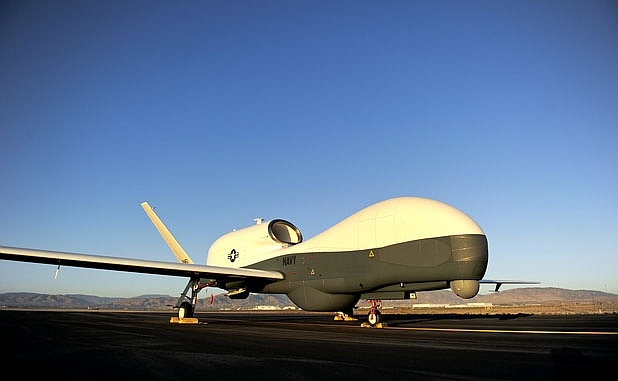
The U.S. Navy continues to assess its options to replace a sense-and-avoid radar that was to be used on the Northrop Grumman MQ-4C Triton unmanned aircraft, but failed to meet expectations.

Northrop Grumman MQ-4C Triton unmanned aircraft

Exelis was selected by Northrop to provide the radar, but the Navy put a stop-work on the contract one year ago and began an assessment of alternatives. No alternative is available off the shelf, says Sean Burke, Navy deputy program manager. The problem was miniaturizing the advanced, electronically scanned array (AESA) radar technology and providing sufficient cooling and power within the available weight and space. It was a “technical solution that turned out to be very challenging for us,” Burke said.

“We are really at the edge of the technology” in developing the system, said Mike Mackey, Northrop Grumman’s Triton program manager. He and Burke briefed the media on the program during the annual Sea-Air-Space 2014 show hosted by the Navy League.

Tuesday, April 8, 2014

Airbus Defence and Space receives radar contract extension in the Middle East

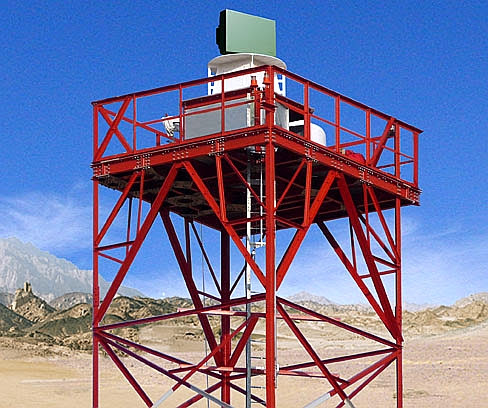
Airbus Defence and Space has been awarded a contract for the delivery of four of its Spexer 2000 security radars to further improve the surveillance of the borders of a major Middle Eastern country. The contract is an extension to an existing contract for the delivery of more than 40 Spexer 2000 radars, which have been operating successfully for almost two years now.

The Spexer 2000 security radar improves the surveillance of borders substantially. Photo: Airbus Defence and Space

Thomas Müller, head of the Business Line Electronics at Airbus Defence and Space, said: “Spexer 2000 is using state-of-the-art Active Electronically Scanning Array (AESA) technology, which provides a multi-tasking and multi-mode capability, and increases the detection and target assessment capability substantially. Due to this, Spexer 2000 can replace several conventional radars.”

Sunday, March 16, 2014

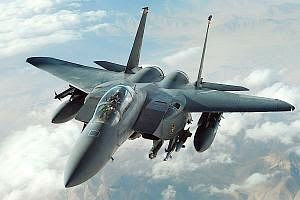
Air Force Updates F-15 Fleet’s Radars, Sensors

The Air Force is in the early phases of a fleet-wide technological upgrade to the F-15 fighter jet to keep it in the air through 2035 and beyond, service officials said.

The upgrades include new radar, electronic warfare gear and computer systems for the F-15 C/D variants and the F-15E dual-role fighter, said Lt. Col. William Ottati, F-15 Program Element Monitor.

The F-15 C/D fighter planeThe F-15 C/D fighter planes, which first emerged in the mid-70s, are primarily engineered for air-to-air combat and air superiority missions. The F-15E strike eagle aircraft, first produced in the late 1980s, combine air-to-air attack technology with ground-strike mission ability.

Air Force leaders want to upgrade the fighters with the latest radars, electronics and sensors in order to keep them viable should the U.S. face a more advanced military than Iraq and Afghanistan.

Tuesday, March 4, 2014

Airbus Defence and Space naval radars to be showcased at DIMDEX 2014, booth No 435

At DIMDEX 2014, it's the first time that Airbus Defence and Space - a new division within the Airbus Group – is publicly present with all its four business lines at an exhibition in the Middle East region. The division has been formed by combining the business activities of Cassidian, Astrium and Airbus Military. At previous DIMDEX shows just Cassidian was present with its defence and security portfolio.

Airbus Defence and Space is Europe’s number one defence and space enterprise, the second largest space business worldwide and among the top ten global defence enterprises. It employs some 40,000 employees generating revenues of approximately €14 billion per year.

Within this new organisation Airbus Defence and Space is reinforcing its capabilities to service the customers better with a one-stop-shop offering an integrated portfolio based on one sales organisation under one strong brand, continue to build on a strong and reliable partnership with one known face to the customer and present the integrated and innovative product and services portfolio at competitive prices. The new Division started operating at executive level as of 1 January 2014.

Airbus Defence and Space is composed of four business lines: Military Aircraft; Space Systems; Communication, Intelligence & Security (CIS); and Electronics. It brings together a wide portfolio to continue to meet the complex needs of its customers across the world.

At DIMDEX 2014, it's the first time that Airbus Defence and Space - a new division within the Airbus Group – is publicly present with all its four business lines at an exhibition in the Middle East region. The division has been formed by combining the business activities of Cassidian, Astrium and Airbus Military. At previous DIMDEX shows just Cassidian was present with its defence and security portfolio.
Airbus Defence & Space TRS-4D AESA radar will be fitted onboard German Navy's future F125 frigates. Picture: Airbus Defence & Space

The business line Electronics will show a new generation of naval radars with unprecedented capabilities for the surveillance of sea areas and countering asymmetric threats:

TRS-4D is the innovative step from conventional radar into a "new dimension" of operational capability. It enables ships from patrol vessels to frigate size to exert the different detection tasks of a ship-borne medium range surveillance and target acquisition radar, in blue waters and also in complex littorals with high target densities. It performs faster, more accurate and against a wider scope of targets than conventional radars. TRS-4D provides navies and coast guards with the benefits of solid-state based AESA technology, which up to now has been available to highly expensive systems only. A non-rotating variant with four fixed array panels is under production for the new F125 frigates of the German Navy.

At DIMDEX 2014, it's the first time that Airbus Defence and Space - a new division within the Airbus Group – is publicly present with all its four business lines at an exhibition in the Middle East region. The division has been formed by combining the business activities of Cassidian, Astrium and Airbus Military. At previous DIMDEX shows just Cassidian was present with its defence and security portfolio.
Airbus Defence & Space TRSS (Tactical Radar for Surface Surveillance).
Picture: Airbus Defence & Space

Also on display is TRSS (= Tactical Radar for Surface Surveillance), a new naval X-Band radar optimized for the detection of extremely small objects and countering asymmetric threats. Based upon the latest AESA radar technology (AESA = Active Electronically Scanning Array), TRSS substantially increases the detection capabilities, and thus the protection level of navy ships and coast guard vessels. TRSS is able to detect and distinguish small objects precisely at close ranges, e.g. individual swimmers. These features give ship operators an optimal overview of the situation, e.g. against terrorist attacks, and enable ships to monitor movements on land.

Source
Thursday, February 6, 2014

Israel Aerospace Industries announces a new AESA Maritime Patrol Radar

Israel Aerospace Industries (IAI) is at an advanced stage of integration and ground testing for the ELM-2022ES Active Electronically Scanned Array (AESA) radar – the latest addition to its best selling ELM-2022 Maritime Patrol Radar (MPR) family.

The ELM-2022ES AESA MPR, developed by IAI’s subsidiary and group, ELTA Systems Ltd, implements the proven operating modes of the ELM-2022 family, together with additional modes derived from the unique capabilities of AESA technology. The radar system combines mechanical scanning in the horizontal plane with fine beam shifting, and full electronic scanning in the vertical plane, providing improved detection, particularly at high sea states, and enabling efficient use of the radar in air/air and air/surface modes.
Using state-of-the-art signal processors, based on the latest powerful multi-core components, allows implementation of new algorithms that take maximum advantage of the AESA technology. A significant improvement in target detection performance is in imaging modes such as Inverse Synthetic Aperture Radar (ISAR) and in Ground Moving Target Indication (GMTI) modes.

“As pioneers in the field of airborne AESA radars this was a natural evolution for us,” said Mr. Joseph Weiss, IAI’s CEO & President. “The new radar is far more advanced than any other radar in its category, and we have been waiting for the right time when this technology would become cost-effective for our customers.”

The system is undergoing qualification tests for airborne applications, preparing it for delivery by mid-2015 and is fully compatible with current radar installations.

IAI press release

Monday, August 5, 2013

Northrop Begins Work on U.S./Taiwan F-16 AESA Radar Upgrade

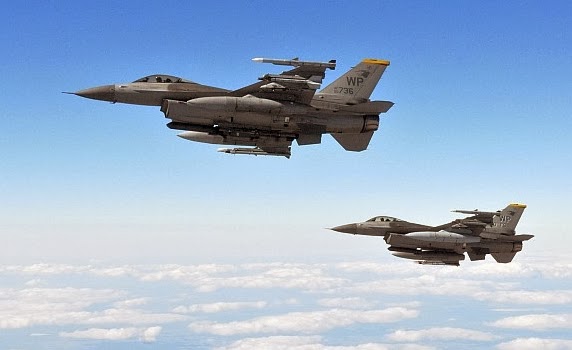
Northrop Grumman expects to be under contract with Lockheed Martin shortly after being selected to supply the active, electronically scanned array (AESA) radar for an F-16 avionics upgrade under development for the U.S. Air Force and Taiwan.

Two F-16 Fighting Falcons pilots maintain their position as they wait for the rest of their four-ship formation to refuel during Red Flag-Alaska April 27, 2010. (U.S. Air Force photo/Capt. Shannon Collins) USAF

Lockheed Martin is the prime contractor for the Combat Avionics Programmed Extension Suite (Capes) upgrade and was tasked by the Air Force with making the AESA source selection, selecting incumbent F-16 radar supplier Northrop Grumman over rival Raytheon.

Around 300 U.S. F-16C/Ds and 145 Taiwanese F-16A/Bs will be upgraded with Northrop’s Scaled Agile Beam radar (SABR), which is based on technology from the F-22’s APG-77(V)1 and F-35’s APG-81 AESAs.

Saturday, September 22, 2012

SABR AESA Radar for the F-16

Northrop Grumman's Scalable Agile Beam Radar (SABR), designed specifically for the F-16, is the newest addition to the Northrop Grumman robust family of multi-function sensors. By leveraging Northrop Grumman's world-leading Active Electronically Scanned Array (AESA) technology base, SABR maximizes radar system performance within existing F-16 allocations. SABR has been chosen for the F-16 AESA upgrade program.