Showing posts with label AN/TPS-75. Show all posts

Thursday, August 28, 2014

US Air Force Could Award Long-Range Radar Contract Next Week

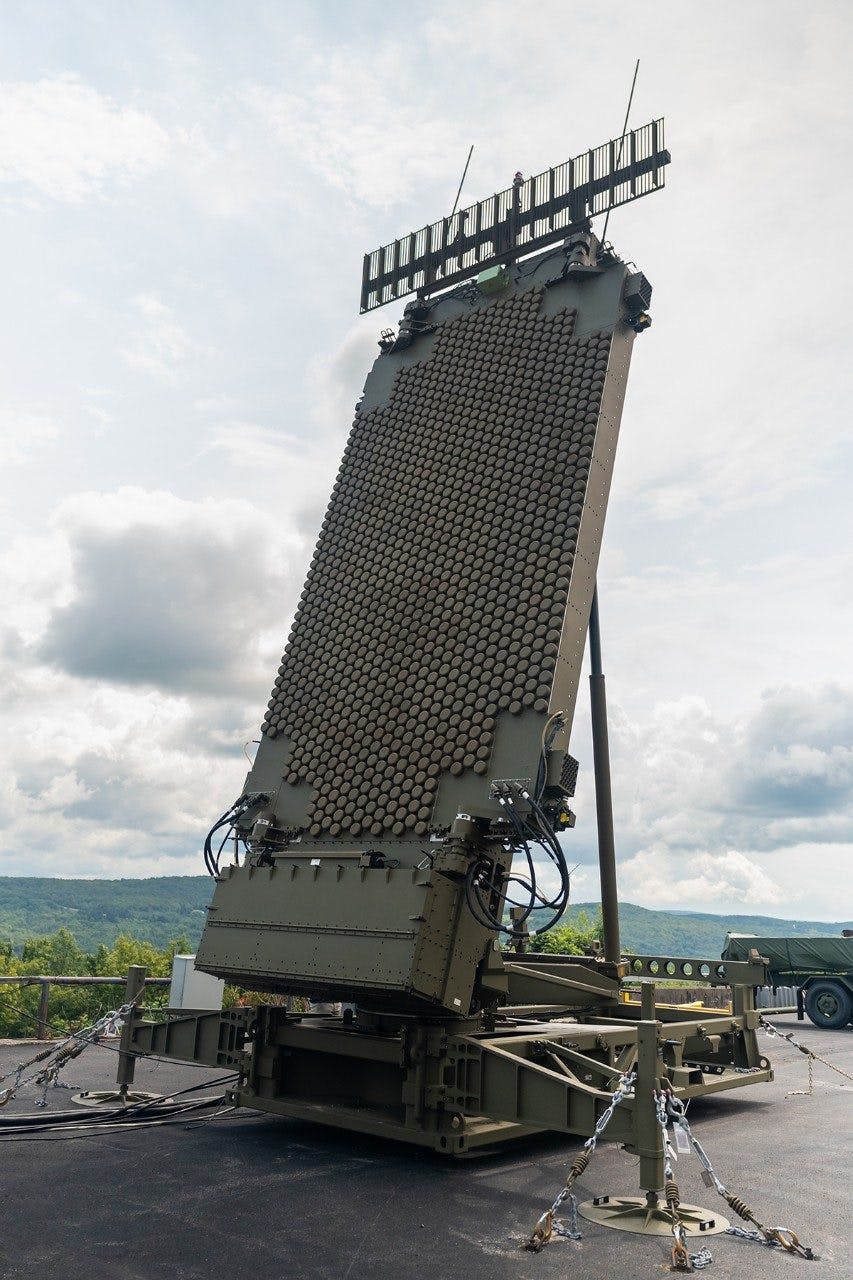
Fire Control RadarThe U.S. Air Force is close to naming the winner of a contract to produce long-range, ground-based sensors for tracking hostile aircraft and missiles, Defense News reported Wednesday.

Aaron Mehta writes that Lockheed Martin (NYSE: LMT), Northrop Grumman (NYSE: NOC) and Raytheon (NYSE: RTN) are competing for the Air Force’s Three Dimensional Expeditionary Long-Range Radar development program.

The 3DELRR contract could be awarded next week and the selected contractor will work to build 35 air defense radars for the service, according to Defense News.

Mehta reports the branch plans a critical design review of the system by the end of the first quarter of 2015.

The Air Force also expects the technology to enter low-rate initial production in early fiscal 2018 and achieve initial operational capability by fiscal 2020.

3DELRRs will be built to replace the branch’s legacy AN/TPS-75 field radars, according to Mehta’s article.

Source

Wednesday, March 26, 2014

New Threats, New Technologies Push New USAF Radar Program

WASHINGTON — For years, the AN/TPS-75 has been the US Air Force’s “grab and go” radar system. Get it into an operational field, set it up, and it provides wide-range coverage of what is going on in the skies.

But like so much of the service’s technology, the TPS-75 needs revitalization. The threat environment has changed, and new technologies could render the radar “incapable of detecting some current and emerging threats,” according to service budget documents.
Enter the Three Dimensional Expeditionary Long Range Radar (3DELRR) program. The service plans to replace the TPS-75 with 3DELRR toward the end of the decade, assuming the budget holds.

In the Pentagon’s fiscal 2014 budget request, the service asked for $70.1 million in research, development, test and evaluation funds for the radar program, a figure Congress knocked down to $54.1 million in the National Defense Authorization Act.

For fiscal 2015, the Air Force has again sought an increase, this time to $88.8 million. That request rises to $98.2 million in fiscal 2016, and then drops to $68.6 million in fiscal 2017, $24.7 million in fiscal 2018 and $35.7 million in fiscal 2019.

A timeline included in the budget notes a goal to get 3DELRR out for initial deployment by fiscal 2020, which may explain why those figures drop over time; as the program gets closer to procurement, the need for research funding slows down. Low-rate initial production is scheduled to begin by early fiscal 2018.

Wednesday, March 19, 2014

New USAF Radar Program

WASHINGTON — For years, the AN/TPS-75 has been the US Air Force’s “grab and go” radar system. Get it into an operational field, set it up, and it provides wide-range coverage of what is going on in the skies.

System Check: US Air Force personnel conduct an operational check of an AN/TPS-75 radar system at Balad Air Base, Iraq. (US Air Force)

But like so much of the service’s technology, the TPS-75 needs revitalization. The threat environment has changed, and new technologies could render the radar “incapable of detecting some current and emerging threats,” according to service budget documents.

Enter the Three Dimensional Expeditionary Long Range Radar (3DELRR) program. The service plans to replace the TPS-75 with 3DELRR toward the end of the decade, assuming the budget holds.

In the Pentagon’s fiscal 2014 budget request, the service asked for $70.1 million in research, development, test and evaluation funds for the radar program, a figure Congress knocked down to $54.1 million in the National Defense Authorization Act.

For fiscal 2015, the Air Force has again sought an increase, this time to $88.8 million. That request rises to $98.2 million in fiscal 2016, and then drops to $68.6 million in fiscal 2017, $24.7 million in fiscal 2018 and $35.7 million in fiscal 2019.

Tuesday, July 26, 2011

AN/TPS-75 Radar System

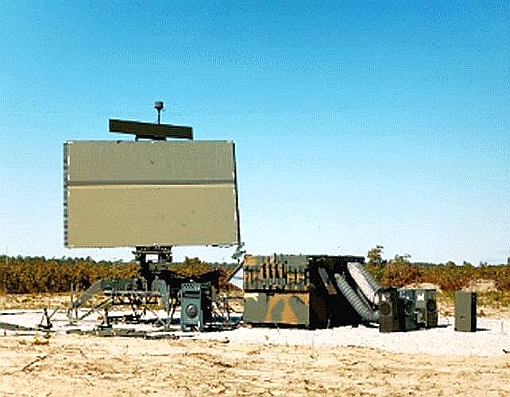
The TPS-75 has been the front line US Air Force air defense system standard since 1968. The AN/TPS-75 Radar System ("Tipsy 75") is a mobile, tactical radar system capable of providing radar azimuth, range, height, and Identification Friend or Foe (IFF) information for a 240-nautical-mile area. This deployable/transportable radar system is capable of providing long range radar data to support operations and control of tactical aircraft. The TPS-75 today forms the backbone of the US Air Force Air Defense system. The AN/TPS-75 Radar system provides a "real-time" radar airspace picture and data in support of the battle commander and the Ground Theater Air Control System (GTACS) via radio, telephone, microwave relay, or satellite communications link. The AN/TPS-75 radar system includes the UPX-27 IFF/SIF equipment, Tactical Air Operation Interface Gp OA 9194/TYQ-23(V)2, Modular Control Equipment Interface Group (MIG) and AN/TLQ-32 ARM Decoy.

AN/TPS-75 Radar System ("Tipsy 75")

The AN/TPS-75 is a mobile ground radar set designed to conduct long-range search and altitude-finding operations simultaneously. Data from the AN/TPS-75 can be combined with information from other radar to form an integrated picture of the aerial battlefield for theater commanders. The 729th Air Control Squadron, Hill AFB, Utah, uses this radar for a variety of missions. The self-contained data gathering system operates independent of inclement weather and jamming environments and requires only a 400-Hz power source to operate.