Showing posts with label Northrop Grumman. Show all posts

Thursday, August 28, 2014

US Air Force Could Award Long-Range Radar Contract Next Week

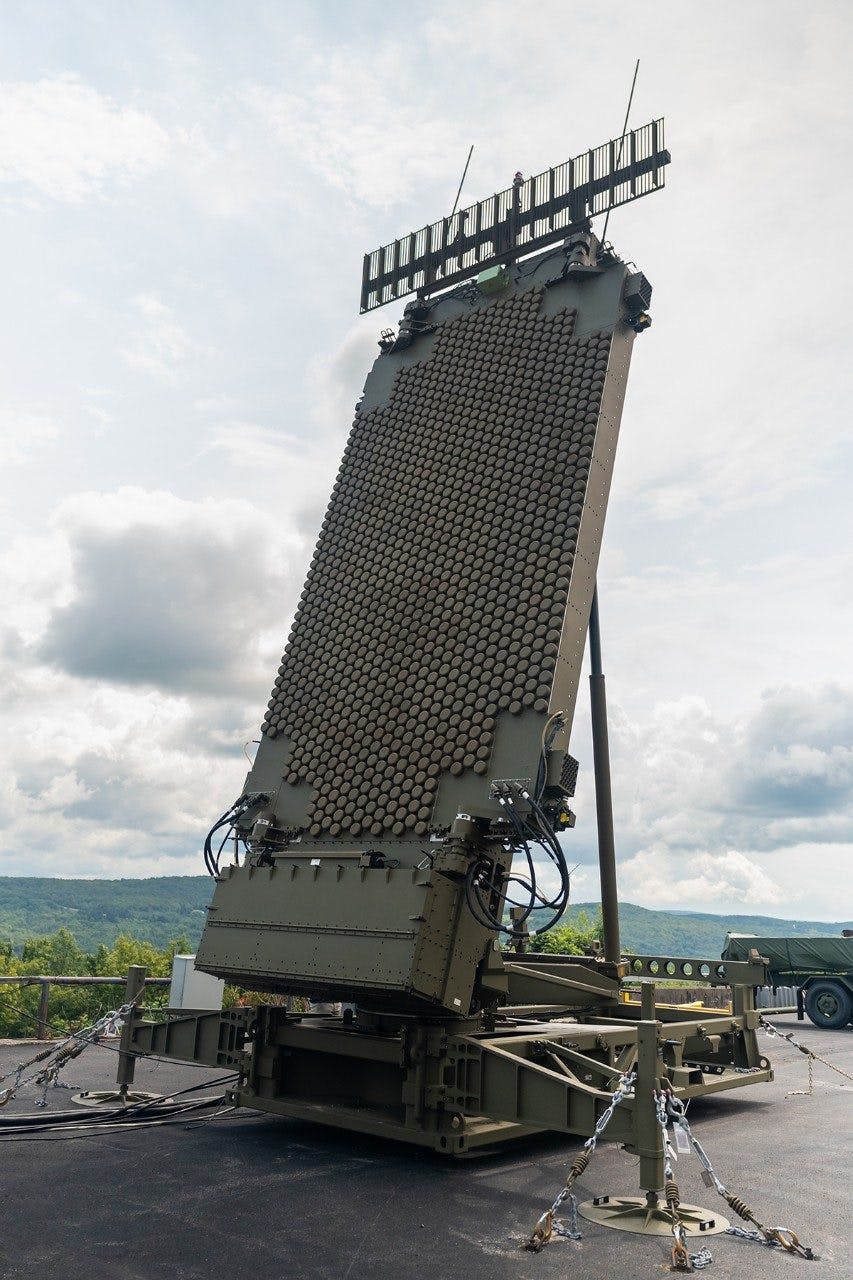
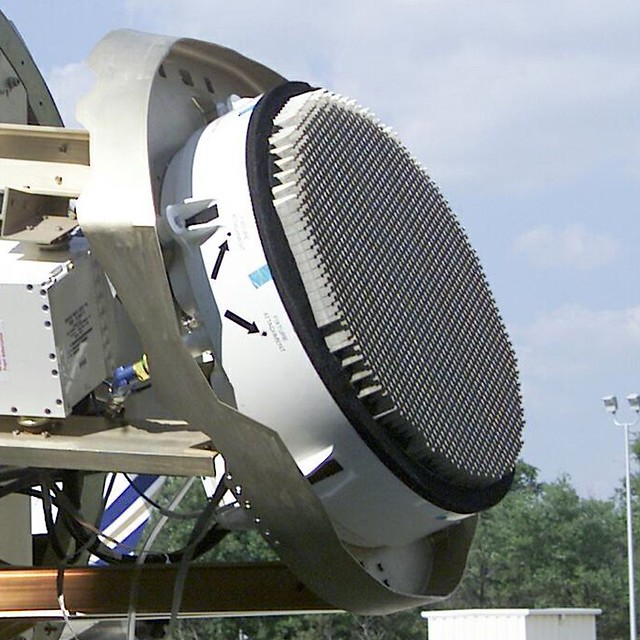
Fire Control RadarThe U.S. Air Force is close to naming the winner of a contract to produce long-range, ground-based sensors for tracking hostile aircraft and missiles, Defense News reported Wednesday.

Aaron Mehta writes that Lockheed Martin (NYSE: LMT), Northrop Grumman (NYSE: NOC) and Raytheon (NYSE: RTN) are competing for the Air Force’s Three Dimensional Expeditionary Long-Range Radar development program.

The 3DELRR contract could be awarded next week and the selected contractor will work to build 35 air defense radars for the service, according to Defense News.

Mehta reports the branch plans a critical design review of the system by the end of the first quarter of 2015.

The Air Force also expects the technology to enter low-rate initial production in early fiscal 2018 and achieve initial operational capability by fiscal 2020.

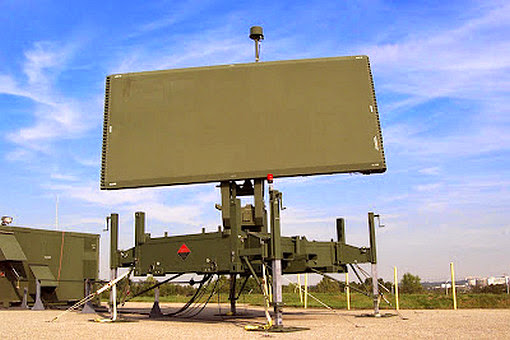
3DELRRs will be built to replace the branch’s legacy AN/TPS-75 field radars, according to Mehta’s article.

Source

Wednesday, April 9, 2014

Sense-And-Avoid Still Causing Triton Turbulence

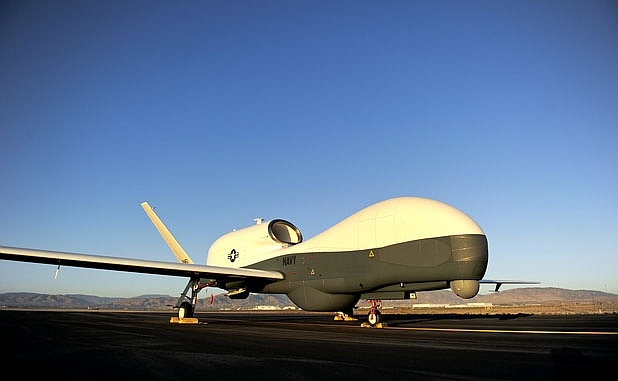
The U.S. Navy continues to assess its options to replace a sense-and-avoid radar that was to be used on the Northrop Grumman MQ-4C Triton unmanned aircraft, but failed to meet expectations.

Northrop Grumman MQ-4C Triton unmanned aircraft

Exelis was selected by Northrop to provide the radar, but the Navy put a stop-work on the contract one year ago and began an assessment of alternatives. No alternative is available off the shelf, says Sean Burke, Navy deputy program manager. The problem was miniaturizing the advanced, electronically scanned array (AESA) radar technology and providing sufficient cooling and power within the available weight and space. It was a “technical solution that turned out to be very challenging for us,” Burke said.

“We are really at the edge of the technology” in developing the system, said Mike Mackey, Northrop Grumman’s Triton program manager. He and Burke briefed the media on the program during the annual Sea-Air-Space 2014 show hosted by the Navy League.

Wednesday, March 26, 2014

New Threats, New Technologies Push New USAF Radar Program

WASHINGTON — For years, the AN/TPS-75 has been the US Air Force’s “grab and go” radar system. Get it into an operational field, set it up, and it provides wide-range coverage of what is going on in the skies.

But like so much of the service’s technology, the TPS-75 needs revitalization. The threat environment has changed, and new technologies could render the radar “incapable of detecting some current and emerging threats,” according to service budget documents.
Enter the Three Dimensional Expeditionary Long Range Radar (3DELRR) program. The service plans to replace the TPS-75 with 3DELRR toward the end of the decade, assuming the budget holds.

In the Pentagon’s fiscal 2014 budget request, the service asked for $70.1 million in research, development, test and evaluation funds for the radar program, a figure Congress knocked down to $54.1 million in the National Defense Authorization Act.

For fiscal 2015, the Air Force has again sought an increase, this time to $88.8 million. That request rises to $98.2 million in fiscal 2016, and then drops to $68.6 million in fiscal 2017, $24.7 million in fiscal 2018 and $35.7 million in fiscal 2019.

A timeline included in the budget notes a goal to get 3DELRR out for initial deployment by fiscal 2020, which may explain why those figures drop over time; as the program gets closer to procurement, the need for research funding slows down. Low-rate initial production is scheduled to begin by early fiscal 2018.

Wednesday, March 19, 2014

New USAF Radar Program

WASHINGTON — For years, the AN/TPS-75 has been the US Air Force’s “grab and go” radar system. Get it into an operational field, set it up, and it provides wide-range coverage of what is going on in the skies.

System Check: US Air Force personnel conduct an operational check of an AN/TPS-75 radar system at Balad Air Base, Iraq. (US Air Force)

But like so much of the service’s technology, the TPS-75 needs revitalization. The threat environment has changed, and new technologies could render the radar “incapable of detecting some current and emerging threats,” according to service budget documents.

Enter the Three Dimensional Expeditionary Long Range Radar (3DELRR) program. The service plans to replace the TPS-75 with 3DELRR toward the end of the decade, assuming the budget holds.

In the Pentagon’s fiscal 2014 budget request, the service asked for $70.1 million in research, development, test and evaluation funds for the radar program, a figure Congress knocked down to $54.1 million in the National Defense Authorization Act.

For fiscal 2015, the Air Force has again sought an increase, this time to $88.8 million. That request rises to $98.2 million in fiscal 2016, and then drops to $68.6 million in fiscal 2017, $24.7 million in fiscal 2018 and $35.7 million in fiscal 2019.

Wednesday, October 16, 2013

Raytheon to build advanced radar systems for US Navy

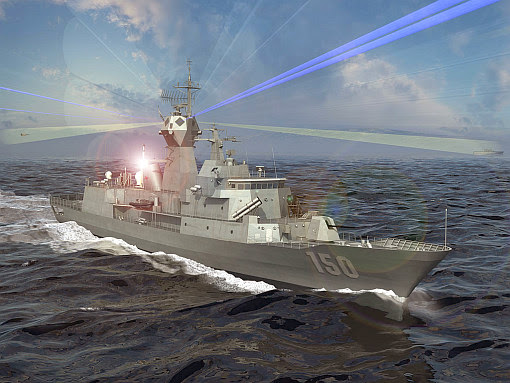
The US Navy has chosen Raytheon Co. over Lockheed Martin Corp and Northrop Grumman Corp to build its new defense radar for use on Arleigh Burke destroyers in a contract valued at $1.6 billion.

For use with the Aegis combat system, the next-gen air and missile defense systems will be integrated with the existing AN/SPQ-9B X-band radar when officially put to use in 2016. Designs are set to outfit at least 22 naval ships; half being built at General Dynamics Corp.'s Bath Iron Works in Maine.

Air and Missile Defense Radar (AMDR) concept

According to reports, the radar will be designed to detect long-range missiles. 

Though the initial design contract was worth $386 million, the optional deal to procure up to nine radars brings the value up.

Monday, October 14, 2013

LONGBOW LLC Receives $51 Million Contract for Republic of Korea Apache Radar Systems

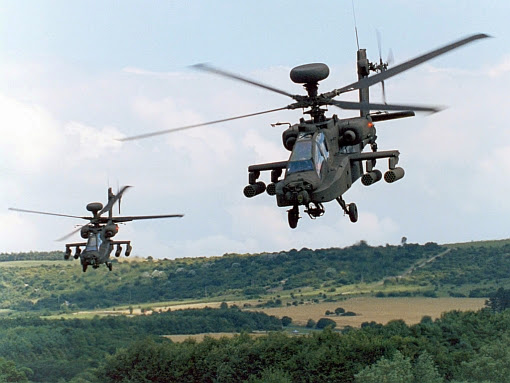
The LONGBOW Limited Liability Company, a joint venture of Lockheed Martin and Northrop Grumman, has received a $51 million foreign military sales contract to provide the Republic of Korea with LONGBOW Fire Control Radars (FCRs) for the AH-64E Apache attack helicopter.

AH-64E Apache attack helicopter

The contract includes six LONGBOW FCR systems, spares and in-country support. Production is scheduled through 2016, with assembly of the LONGBOW FCR performed at Lockheed Martin’s Ocala and Orlando, Fla., facilities, and Northrop Grumman's Baltimore, Md., facility.

“The Republic of Korea is the 10th international customer for LONGBOW systems,” said Tom Eldredge, LONGBOW LLC president and director of LONGBOW programs at Lockheed Martin Missiles and Fire Control. “The LONGBOW FCR is a battle-proven radar system that will provide Republic of Korea Apache pilots with increased situational awareness, survivability and lethality.”

“The LONGBOW FCR team will provide the Republic of Korea with a product that promotes greater regional security and provides warfighters with the highest level of protection while increasing the international Apache footprint,” said Mike Galletti, director of the Tactical Sensor Solutions-Aviation business unit for Northrop Grumman’s Land and Self Protection Systems Division.

Since 1998, LONGBOW FCR has provided Apache aircrews with target detection, location, classification and prioritization. In all weather, over multiple terrains and through any battlefield obscurant, the radar allows automatic and rapid multitarget engagement.

Source: Lockheed Martin Corporation

Monday, August 5, 2013

Northrop Begins Work on U.S./Taiwan F-16 AESA Radar Upgrade

Northrop Grumman expects to be under contract with Lockheed Martin shortly after being selected to supply the active, electronically scanned array (AESA) radar for an F-16 avionics upgrade under development for the U.S. Air Force and Taiwan.

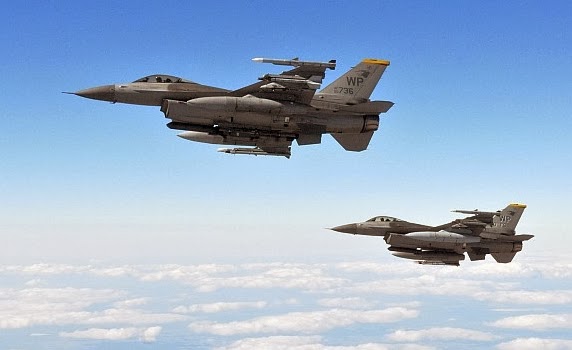
Two F-16 Fighting Falcons pilots maintain their position as they wait for the rest of their four-ship formation to refuel during Red Flag-Alaska April 27, 2010. (U.S. Air Force photo/Capt. Shannon Collins) USAF

Lockheed Martin is the prime contractor for the Combat Avionics Programmed Extension Suite (Capes) upgrade and was tasked by the Air Force with making the AESA source selection, selecting incumbent F-16 radar supplier Northrop Grumman over rival Raytheon.

Around 300 U.S. F-16C/Ds and 145 Taiwanese F-16A/Bs will be upgraded with Northrop’s Scaled Agile Beam radar (SABR), which is based on technology from the F-22’s APG-77(V)1 and F-35’s APG-81 AESAs.

Saturday, September 22, 2012

SABR AESA Radar for the F-16

Northrop Grumman's Scalable Agile Beam Radar (SABR), designed specifically for the F-16, is the newest addition to the Northrop Grumman robust family of multi-function sensors. By leveraging Northrop Grumman's world-leading Active Electronically Scanned Array (AESA) technology base, SABR maximizes radar system performance within existing F-16 allocations. SABR has been chosen for the F-16 AESA upgrade program.

Wednesday, February 24, 2010

LONGBOW LLC Awarded $86 Million to Support and Sustain U.K. Apache Attack Helicopters

ORLANDO, FL, February 22nd, 2010 — The LONGBOW Limited Liability Company, a joint venture of Lockheed Martin and Northrop Grumman, was recently awarded an $86 million contract from AgustaWestland to support LONGBOW FCR systems on the United Kingdom Apache AH Mk-1 aircraft.

United Kingdom Apache AH Mk-1

“The LONGBOW FCR is an essential element of U.K. Apache operations in Afghanistan,” said Jerry Garman, LONGBOW LLC president and director of LONGBOW programs at Lockheed Martin Missiles and Fire Control. “Through this partnership with AgustaWestland, we will ensure the highest operational availability and system reliability at the lowest sustainment cost”.

The four-year contract includes engineering services, integrated logistics and an in-country repair capability. Support services will continue through March 2014, and will be performed at Wattisham Airfield in the U.K.; Lockheed Martin facilities in Ocala and Orlando, FL; and Northrop Grumman facilities in Baltimore, MD.

The contract is a component of the integrated operational support provided by AgustaWestland to the Ministry of Defence. A formal signing ceremony at the U.K. Apache main operating base at Wattisham Airfield in October marked the launch of this effort.

For more than a decade, the LONGBOW FCR has provided Apache aircrews with target detection, location, classification and prioritization. In all weather, over multiple terrains and through any battlefield obscurant, the radar allows automatic and rapid multi-target engagement. The LONGBOW FCR integrates with the M299 smart launcher and the LONGBOW HELLFIRE missile, enhancing the Apache’s lethality fourfold and increasing survivability sevenfold.

Northrop Grumman Corporation is a global defense and technology company whose 120,000 employees provide innovative systems, products and solutions in information and services, electronics, aerospace and shipbuilding to government and commercial customers worldwide.

Source: Lockheed Martin