Showing posts with label Lockheed Martin. Show all posts

Thursday, August 28, 2014

US Air Force Could Award Long-Range Radar Contract Next Week

Fire Control RadarThe U.S. Air Force is close to naming the winner of a contract to produce long-range, ground-based sensors for tracking hostile aircraft and missiles, Defense News reported Wednesday.

Aaron Mehta writes that Lockheed Martin (NYSE: LMT), Northrop Grumman (NYSE: NOC) and Raytheon (NYSE: RTN) are competing for the Air Force’s Three Dimensional Expeditionary Long-Range Radar development program.

The 3DELRR contract could be awarded next week and the selected contractor will work to build 35 air defense radars for the service, according to Defense News.

Mehta reports the branch plans a critical design review of the system by the end of the first quarter of 2015.

The Air Force also expects the technology to enter low-rate initial production in early fiscal 2018 and achieve initial operational capability by fiscal 2020.

3DELRRs will be built to replace the branch’s legacy AN/TPS-75 field radars, according to Mehta’s article.

Source

Wednesday, August 27, 2014

Improved US anti-radar missile hits its mark during test

The US Air Force and missile manufacturer Raytheon Co. successfully tested an upgraded anti-radar missile designed to more accurately take out enemy air defense early-warning systems.

An air force Lockheed Martin F-16 on 22 August fired an AGM-88 high-speed anti-radiation missile (HARM), which scored a direct hit on a specific radar emitter outside a zone of exclusion that included another decoy emitter, Raytheon announces.

The AGM-88 is used to find and destroy surface-to-air missile radars, early warning radars, and radar-directed air defence artillery systems to allow safe battlefield overflight of conflict zones by US and allied aircraft. The missiles identify and home in on the electronic transmissions emitted by radar installations. More than 4,000 HARMs have been fired in combat by the eight nations that include them in their munitions inventories.

"Raytheon's HCSM offers the warfighter enhanced capabilities at an affordable price, providing best value for suppression of enemy air defence weapon options," Mike Jarrett, vice president of Raytheon Air Warfare Systems, says in a statement announcing the test’s success.

Improvements to the missile in the recent test include a HARM control section modification (HCSM) that increases accuracy and precision, thereby reducing the risk of collateral damage, Raytheon says. GPS and an inertial measurement unit provide more accurate targeting and navigation data to the warhead after launch “to engage time-critical targets”, the company says.

The missiles is also specially designed to destroy modern surface-to-air missile installations and resist jamming and other counter-HARM systems.

“The HCSM used its new ... capability and successfully impacted the correct target,” Raytheon says. Yet more testing “is needed to determine if the HCSM is ready for deployment to the US Air Force.”

Raytheon produces HARM missiles under a 2012 contract with the air force and is currently under full-rate production.

Source
Wednesday, March 26, 2014

New Threats, New Technologies Push New USAF Radar Program

WASHINGTON — For years, the AN/TPS-75 has been the US Air Force’s “grab and go” radar system. Get it into an operational field, set it up, and it provides wide-range coverage of what is going on in the skies.

But like so much of the service’s technology, the TPS-75 needs revitalization. The threat environment has changed, and new technologies could render the radar “incapable of detecting some current and emerging threats,” according to service budget documents.
Enter the Three Dimensional Expeditionary Long Range Radar (3DELRR) program. The service plans to replace the TPS-75 with 3DELRR toward the end of the decade, assuming the budget holds.

In the Pentagon’s fiscal 2014 budget request, the service asked for $70.1 million in research, development, test and evaluation funds for the radar program, a figure Congress knocked down to $54.1 million in the National Defense Authorization Act.

For fiscal 2015, the Air Force has again sought an increase, this time to $88.8 million. That request rises to $98.2 million in fiscal 2016, and then drops to $68.6 million in fiscal 2017, $24.7 million in fiscal 2018 and $35.7 million in fiscal 2019.

A timeline included in the budget notes a goal to get 3DELRR out for initial deployment by fiscal 2020, which may explain why those figures drop over time; as the program gets closer to procurement, the need for research funding slows down. Low-rate initial production is scheduled to begin by early fiscal 2018.

Thursday, March 20, 2014

Poland considers MEADS anti-missile radar

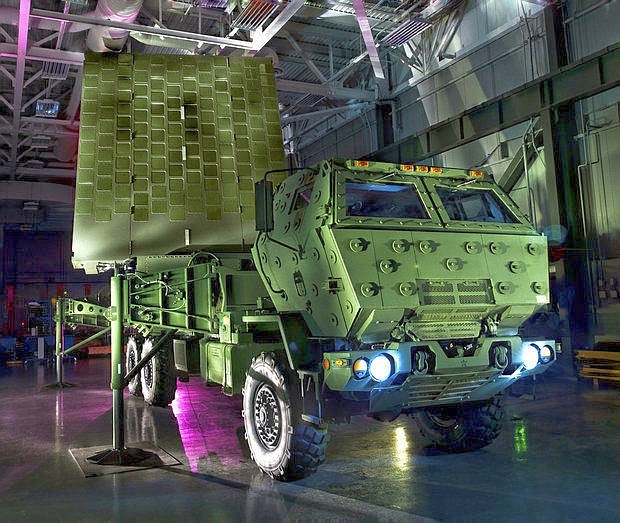
This surveillance radar for the MEADS missile defense system was designed and developed at the Lockheed Martin plant in Salina, NY. Costs were shared by NATO allies the United States, Germany and Italy. The surveillance radar can search 360-degrees for incoming missiles, planes and drones and be hauled around on the back of a truck. (Courtesy Lockheed Martin)

WASHINGTON -- A missile defense system the United States has no plans to deploy may find new life in Poland, where leaders Tuesday welcomed Vice President Joe Biden amid rising tensions over Russia's takeover of Crimea.

As Biden visited with President Bronislaw Komorowski in Warsaw, other Polish leaders met privately Tuesday with executives from MEADS International, the consortium developing the Medium Extended Air Defense System.

Poland selected MEADS International, and its main U.S. partner -- Lockheed Martin Corp. -- as one of four finalists for a contract worth up to $5 billion to modernize its air and missile defense systems.

If MEADS wins the competition, it would help boost business at Lockheed Martin in Salina, which developed the 360-degree search radar for the anti-missile system.
The other finalists for the Polish contract are a French consortium that includes Thales and MBDA, the Israeli government, and Massachusetts-based Raytheon, developer of the Patriot anti-missile system.

Wednesday, March 19, 2014

New USAF Radar Program

WASHINGTON — For years, the AN/TPS-75 has been the US Air Force’s “grab and go” radar system. Get it into an operational field, set it up, and it provides wide-range coverage of what is going on in the skies.

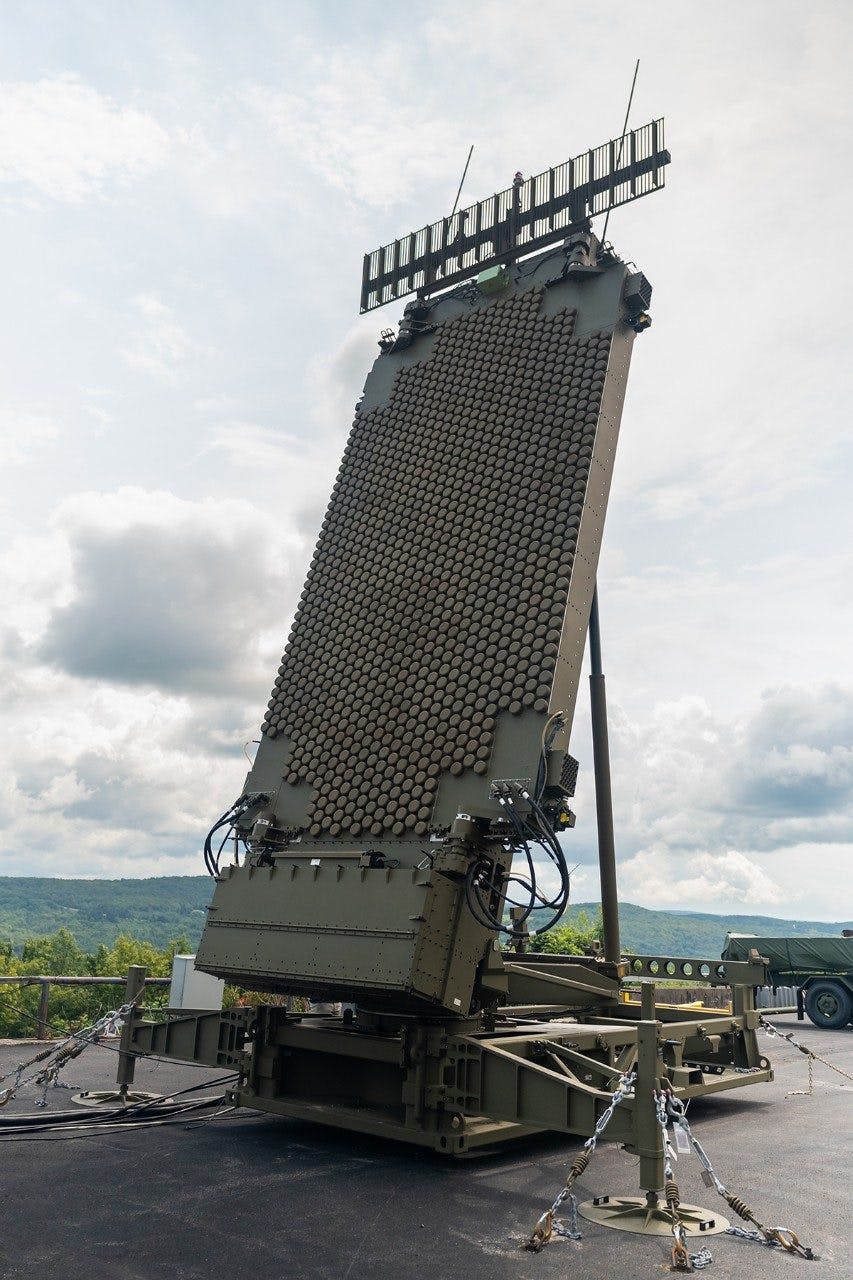
System Check: US Air Force personnel conduct an operational check of an AN/TPS-75 radar system at Balad Air Base, Iraq. (US Air Force)

But like so much of the service’s technology, the TPS-75 needs revitalization. The threat environment has changed, and new technologies could render the radar “incapable of detecting some current and emerging threats,” according to service budget documents.

Enter the Three Dimensional Expeditionary Long Range Radar (3DELRR) program. The service plans to replace the TPS-75 with 3DELRR toward the end of the decade, assuming the budget holds.

In the Pentagon’s fiscal 2014 budget request, the service asked for $70.1 million in research, development, test and evaluation funds for the radar program, a figure Congress knocked down to $54.1 million in the National Defense Authorization Act.

For fiscal 2015, the Air Force has again sought an increase, this time to $88.8 million. That request rises to $98.2 million in fiscal 2016, and then drops to $68.6 million in fiscal 2017, $24.7 million in fiscal 2018 and $35.7 million in fiscal 2019.

Lockheed Martin and Rowan University Partner on Radar Technology

Lockheed Martin and Rowan University are kicking off an innovative, strategic partnership to develop new technologies for a broad range of radar system applications in support of national defense. As threats to the United States become increasingly more complex, this next generation of radar technology is critical to protecting national assets and requires the dedication of an educated workforce.

Lockheed Martin and the University, which have collaborated on projects as part of the Rowan College of Engineering clinic program, are working together to expand their current partnership to conduct research and develop technology.

Research activities will be conducted at the South Jersey Technology Park at Rowan University in Mantua Township, N.J., about a mile from Rowan’s main campus in Glassboro. As research activities expand in scope, these activities will be accommodated at the planned second building at the Technology Park, which opened its first structure—the Samuel H. Jones Innovation Center—in 2008. The Innovation Center, at the juncture of Routes 55 and 322, is home to 16 sponsored College of Engineering research labs, among other offices.

Thursday, November 14, 2013

MEADS Dual Intercept Flight Test 02

The Medium Extended Air Defense System (MEADS) intercepted and destroyed two simultaneous targets attacking from opposite directions during a stressing demonstration of its 360-degree air and missile defense (AMD) capabilities at White Sands Missile Range, N.M. The flight test achieved all criteria for success. Learn more…

MEADS International, a multinational joint venture headquartered in Orlando, Fla., is the prime contractor for the MEADS system. Major subcontractors and joint venture partners are MBDA in Italy and Germany, and Lockheed Martin in the United States. The MEADS program management agency NAMEADSMA is located in Huntsville, Ala.

Friday, July 6, 2012

‘Spy’ Radar Arrays Arrive in Adelaide

AN/SPY-1D(V) phased array radar for Hobart Class Air Warfare Destroyers (all photos : Lockheed Martin)

Minister for Defence Materiel Jason Clare announced the arrival in Adelaide of the first two state of the art ‘SPY’ radar array faces that will be installed on the Air Warfare Destroyers (AWDs).

“The multi-function SPY radar is capable of search, automatic detection, tracking of air and surface targets and missile engagement support,” Mr Clare said.

“It works to distinguish signals from stationary or moving targets and to identify and reject ‘clutter’ such as clouds and flocks of birds.”

Wednesday, October 19, 2011

Missile defense system fight in Washington puts Lockheed's Syracuse-area jobs in crosshairs

This is the first publicly released photo of a prototype of the MEADS missile defense system surveillance radar that was designed and developed at the Lockheed plant in Salina, NY, for the U.S. Army. The surveillance radar can search 360-degrees for incoming missiles, planes and drones and be hauled around on the back of a truck. (Photo supplied by Lockheed Martin Corp.)

Photo supplied by Lockheed Martin Corp.This is the first publicly released photo of a prototype of the MEADS missile defense system surveillance radar that was designed and developed at the Lockheed plant in Salina, NY, for the U.S. Army. The surveillance radar can search 360-degrees for incoming missiles, planes and drones and be hauled around on the back of a truck.

Washington, D.C. -- Hundreds of Central New York workers building a long-delayed missile defense system could lose their jobs if Congress proceeds with a plan to eliminate the program’s funding.

Lockheed Martin’s plant in Salina has a $625 million share of the multibillion-dollar contract to design and develop the Medium Extended Air Defense System, or MEADS.

About 325 Lockheed engineers and technicians in Salina have been building two radars to spot and track enemy missiles, fighter jets or drones — and target them with interceptor missiles.

The United States, with partners Germany and Italy, already has spent $3.4 billion to develop its replacement of the Army’s aging Patriot missile defenses.

Saturday, October 27, 2007

The Ballistic missile defence Radar System AN/TPS-59 (V) 3B use now by the Bahrain Defence Force for air surveillance

In May 2004, the U.S. Marine Corps awarded Lockheed Martin a $43.6 million contract to provide the AN/TPS-59(V)3B Ballistic missile defence Radar System, along with associated supplies, equipment and services, to the Kingdom of Bahrain as a foreign military sale. The production line was restarted, and new radar was produced. Earlier in 2007, members of the Bahrain Defence Force were trained how to operate and maintain the system at Lockheed Martin's Radar Systems facility in Syracuse, NY. The Kingdom's TPS-59 radar proceeded smoothly through a site acceptance test in August 2007, and is now being used by the Bahrain Defence Force for air surveillance.

Source