Showing posts with label Anti-aircraft systems. Show all posts

Thursday, August 28, 2014

Mikros gets Navy contract for radar gear

Mikros Systems Corporation announced it has received a $5 million production contract from the U.S. Navy for its ADEPT radar maintenance equipment.

The electronic systems technology company, headquartered in Princeton, said in a news release that the Navy will purchase 54 ADEPT units over the next year, deploying them on Aegis destroyers and cruisers in support of the AN/SPY-1 radar on air defense and ballistic missile defense missions.

“We have been looking forward to this award for some time,” Mikros President Tom Meaney said in the release. “It’s a major corporate milestone and validates all of the hard work we’ve done on ADEPT development. We are delighted that the Navy has chosen to move forward with ADEPT production.”

Mikros said the contract increases its engineering backlog to an all-time high of approximately $8 million in work. It added that the systems will be assembled at Mikros’ Largo, Florida, facility.
Source

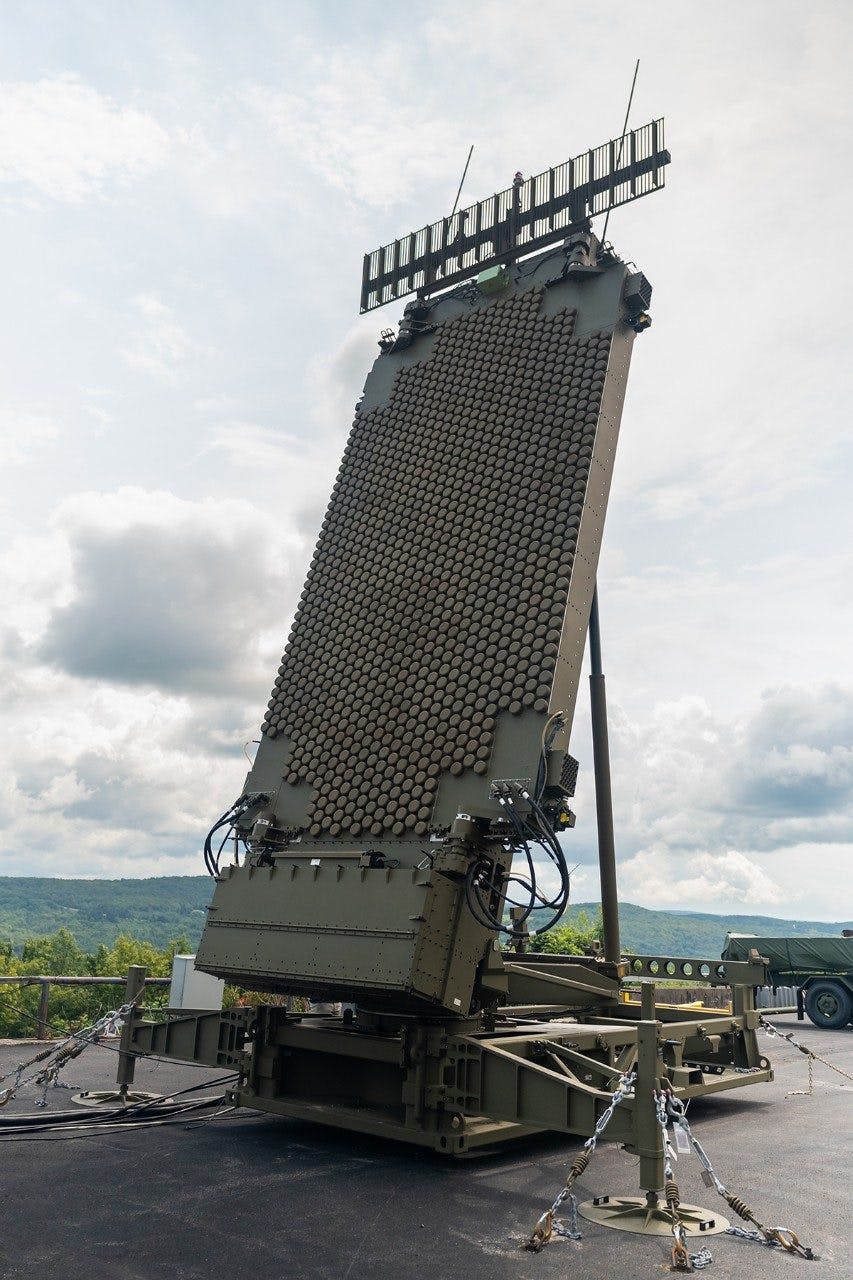
US Air Force Could Award Long-Range Radar Contract Next Week

Fire Control RadarThe U.S. Air Force is close to naming the winner of a contract to produce long-range, ground-based sensors for tracking hostile aircraft and missiles, Defense News reported Wednesday.

Aaron Mehta writes that Lockheed Martin (NYSE: LMT), Northrop Grumman (NYSE: NOC) and Raytheon (NYSE: RTN) are competing for the Air Force’s Three Dimensional Expeditionary Long-Range Radar development program.

The 3DELRR contract could be awarded next week and the selected contractor will work to build 35 air defense radars for the service, according to Defense News.

Mehta reports the branch plans a critical design review of the system by the end of the first quarter of 2015.

The Air Force also expects the technology to enter low-rate initial production in early fiscal 2018 and achieve initial operational capability by fiscal 2020.

3DELRRs will be built to replace the branch’s legacy AN/TPS-75 field radars, according to Mehta’s article.

Source

Monday, August 25, 2014

80K6 - a vehicle-carried three-dimensional all-round-looking Ukrainian radar system

The 80K6 is a vehicle-carried three-dimensional all-round-looking radar system designed to detect and track airborne targets flying at low, medium and high altitudes. It can operate independently or as a part of regional or nation-wide computer-aided control systems. The technology was designed and developed by the State Research and Production Complex Iskra.

Ukrainian Mobile 3-D Air Surveillance radar 80K6M

If deployed with Air Defense Missile Force units, the 80K6 is used for target data generation for air defense missile weapons control systems. It can also be used by Air Force and air defense elements for air traffic control applications.

The 80K6 radar system offers performance capabilities as following:

  • The detection and tracking of air targets;
  • 3D location and cruising speed measurement of air targets in the presence of active/passive jamming or natural noise, or mix of these two;
  • Friend-or-foe air target identification;
  • Receiving flight-related information from friendly aircraft and transmitting the information to authorized users;
  • measuring the difference in flying target levels for accurate target designation;
  • determining azimuth and elevation bearings of active jamming dispensers;
  • feeding output data into autonomous imagers;
  • interoperation with command posts of local and higher nation-wide computerized control systems.

In terms of its technical characteristics and performance capabilities, the 80K6 radar system is as good as foreign-designed equivalents, while being at least fifty percent less expensive. The entire 80K radar system installation finds enough room onboard a single vehicle.

The accomplishment of very demanding performance capabilities was made possible by the employment of sophisticated state-of-the-art technical solutions, including:

  • low side lobe digital phased array providing enhanced performance capabilities involving target location in elevation and resistance to enemy active jamming attempts;
  • a klystron with a high gain factor which is used as transmitting device, providing the required level of average transmitting power while being not bulky and consuming little power;
  • Non-conventional design and configuration of the all-pass filter, providing an enhanced target discrimination performance capability and enabling target discrimination to be performed concurrently with the measurement of targets’ range rates;
  • improved primary information pre-processing algorithms enabling processing losses to be reduced to the minimum;
  • optimized target tracking algorithms enabling the multiple target tracking performance capability to be improved significantly;
  • equipping operator workstations with color displays, enabling operations to be performed in bright daylight.

See PDF booklet

Operating frequency range S-band (2700…2900 MHz)
Target detection  
           range 6 – 8 … 400 km
           in azimuth 360°
           elevation 0 ... 30 – 35°
           ceiling 400 km
Scanning interval 5; 10 sec
Detection range for targets with RCS equal to 3-5 m2, at P=0.8 and F=10-6,  
           at altitudes up to 100 m 40 km

           at altitudes up to 1,000 m

110 km
           at altitudes from 10 to 30 km 300 – 350 km
Clutter suppression coefficient > 50 dB
Number of targets tracked simultaneously 150-200

Time into and out of action

< 30 min

Source

Thursday, June 5, 2014

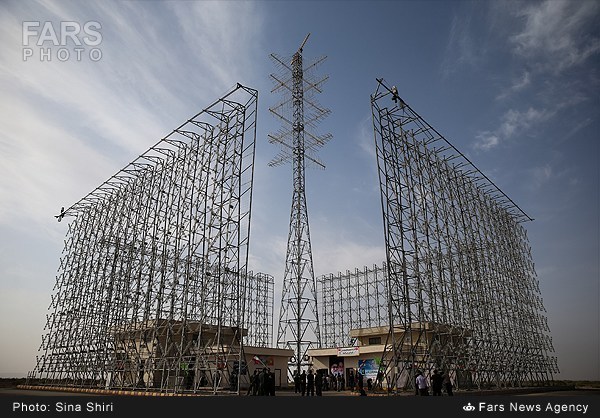
Iran launches cutting-edge Ghadir radar system

Iran's Islamic Revolution Guards Corps (IRGC) has officially put into service a domestically developed long-range radar system capable of detecting stealth aircraft.

The advanced radar system, named Ghadir, was unveiled in a ceremony attended by military top brass, including Commander of Khatam al-Anbiya Air Defense Base Brigadier General Farzad Esmaeili on Monday.

The state-of-the art radar system uses three-dimensional (3-D) technology to detect airborne targets, including radar-evading aircraft, cruise and ballistic missiles, and satellites in low Earth orbits. The system was first unveiled during the Great Prophet 6 military drills in 2011. It was later mass produced by the IRGC's Aerospace Division and underwent several tests in recent months

The Phased Array radar can monitor targets within a radius of 1,100 kilometers at a maximum 300-km altitude.

In November 2013, Iranian navy unveiled an indigenous state-of-the-art array radar system, dubbed Asr (Age), which can detect long-distance targets.
In recent years, Iran has made major breakthroughs in its defense sector and attained self-sufficiency in producing important military equipment and systems.

Despite its great defense achievements, the Islamic Republic has repeatedly said its military might poses no threat to other countries, insisting that its defense doctrine is merely based on deterrence.

3D Phased Array early-warning radar Ghadir, Iran

Иранская РЛС дальнего обнаружения Ghadir

В Иране наконец-то представили трехкоординатную РЛС дальнего обнаружения Ghadir, о строительстве и испытаниях которой много говорили в последние годы. РЛС построена в шахрестане Гермсар остана Семнан, дальность обнаружения целей составляет до 1100 км и высота до 300 км.

Иранская РЛС дальнего обнаружения Ghadir

Wednesday, May 28, 2014

Казахстан собирается приобрести РЛС GM400

22 мая 2014 года на проходившей в столице Казахстана Астане оборонной выставке KADEX-2014 компания ThalesRaytheonSystems (TRS, совместное предприятие французской группы Thales и американской корпорации Raytheon) подписала меморандум о взаимопонимании о предстоящей поставке для Сил воздушной обороны Казахстана 20 наземных радиолокационных станций Ground Master 400 (GM400). В соответствии с меморандумом, сборка РЛС GM400 для Казахстана будет организована совместным предприятием Granit - Thales Electronics с участием Thales и казахстанского ТОО "СКТБ "Гранит" (Алма-Ата). РЛС получила в Казахстане обозначение "НУР". На выставке KADEX-2014 демонстрировался локализованный образец РЛС "НУР" (GM400), выполненный на базе автомобиля "КамАЗ".

РЛС "НУР" (ThalesRaytheonSystems Ground Master 400) в экспозиции выставки KADEX-2014. Астана, май 2014 года (с) ВКонтакте

Wednesday, April 23, 2014

ПВО Сирии

Башару Асаду нужно очень постараться, чтобы сорвать планы запада по «переформатированию» его страны

Уже больше года внимание всего мира приковано к ближневосточному региону, где в очередной раз решается судьба многих народов мусульманских стран. Новым объектом непосредственных государственных интересов США и их союзников по НАТО явилась Сирия с неугодным Западу режимом Башара Асада. Страна балансирует на грани настоящей гражданской войны с многочисленными людскими и материальными потерями. Гибнет мирное население, противоборствующие стороны, как водится, взаимно возлагают вину за это друг на друга. Отряды оппозиции, поддерживаемые Западом, приобретают организованную структуру, единое управление, получают поддержку вооружением, боеприпасами, продовольствием и т.п. с территории Турции, Ирака, Иордании, Ливана, так как сухопутные и воздушные границы Сирии практически открыты. Правительственные войска удерживают города и крупные населенные пункты, в то время как оппозиция контролирует около половины территории страны, включая почти всю сельскую местность.

Thursday, March 20, 2014

Poland considers MEADS anti-missile radar

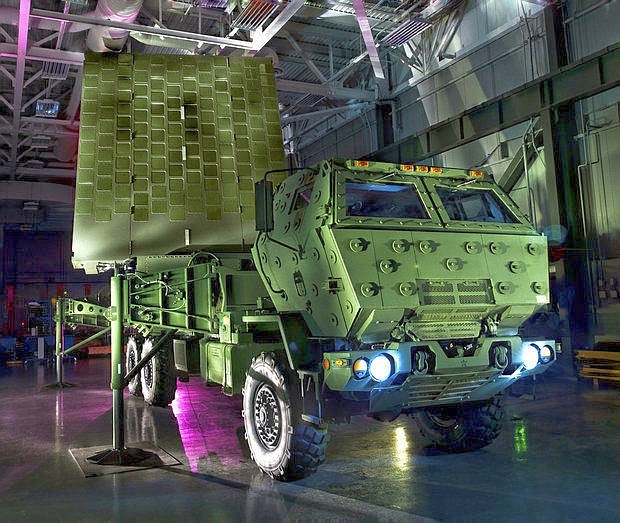
This surveillance radar for the MEADS missile defense system was designed and developed at the Lockheed Martin plant in Salina, NY. Costs were shared by NATO allies the United States, Germany and Italy. The surveillance radar can search 360-degrees for incoming missiles, planes and drones and be hauled around on the back of a truck. (Courtesy Lockheed Martin)

WASHINGTON -- A missile defense system the United States has no plans to deploy may find new life in Poland, where leaders Tuesday welcomed Vice President Joe Biden amid rising tensions over Russia's takeover of Crimea.

As Biden visited with President Bronislaw Komorowski in Warsaw, other Polish leaders met privately Tuesday with executives from MEADS International, the consortium developing the Medium Extended Air Defense System.

Poland selected MEADS International, and its main U.S. partner -- Lockheed Martin Corp. -- as one of four finalists for a contract worth up to $5 billion to modernize its air and missile defense systems.

If MEADS wins the competition, it would help boost business at Lockheed Martin in Salina, which developed the 360-degree search radar for the anti-missile system.
The other finalists for the Polish contract are a French consortium that includes Thales and MBDA, the Israeli government, and Massachusetts-based Raytheon, developer of the Patriot anti-missile system.

Wednesday, March 19, 2014

New USAF Radar Program

WASHINGTON — For years, the AN/TPS-75 has been the US Air Force’s “grab and go” radar system. Get it into an operational field, set it up, and it provides wide-range coverage of what is going on in the skies.

System Check: US Air Force personnel conduct an operational check of an AN/TPS-75 radar system at Balad Air Base, Iraq. (US Air Force)

But like so much of the service’s technology, the TPS-75 needs revitalization. The threat environment has changed, and new technologies could render the radar “incapable of detecting some current and emerging threats,” according to service budget documents.

Enter the Three Dimensional Expeditionary Long Range Radar (3DELRR) program. The service plans to replace the TPS-75 with 3DELRR toward the end of the decade, assuming the budget holds.

In the Pentagon’s fiscal 2014 budget request, the service asked for $70.1 million in research, development, test and evaluation funds for the radar program, a figure Congress knocked down to $54.1 million in the National Defense Authorization Act.

For fiscal 2015, the Air Force has again sought an increase, this time to $88.8 million. That request rises to $98.2 million in fiscal 2016, and then drops to $68.6 million in fiscal 2017, $24.7 million in fiscal 2018 and $35.7 million in fiscal 2019.

Tuesday, January 7, 2014

SCR-270 radar

SCR-270 Early Warning Radar

From Wikipedia, the free encyclopedia

SCR-270: Similar to the model that detected the attacking Pearl Harbor planes (the actual Opana antenna was nine dipoles high by four wide, instead of the eight-by-four configuration shown here). The scale for reading the direction the antenna is pointing to can be seen at the base.

The SCR-270 (Signal Corps Radio model 270) was one of the first operational early warning radars. It was the U.S. Army's primary long-distance radar throughout World War II and was deployed around the world. It is also known as the Pearl Harbor Radar, since it was a SCR-270 set that detected the incoming raid about half an hour before the attack commenced.

Tuesday, December 24, 2013

Музей ПВО, 6-я бригада воздушно-космической обороны в городе Ржеве (фоторепортаж)

22 декабря 2013 года, в честь праздника, секретная в/ч 40963 — 6-я бригада воздушно-космической обороны в городе Ржеве, открыла свои двери для журналистов и почётных гостей. Про праздник чуть позже, а пока я поведу вас в музей ПВО, который находится на территории части.

В уникальном музее соединения собрана техника разных десятилетий. Зенитные пушки образца 1939 года при необходимости уничтожали фашистские танки. Ракетой ЗРК С-75 1 мая 1960 года был сбит, считавшийся неуязвимым, высотный Локхид У-2. Крылатый защитник неба, МиГ-21, – один из самых прославленных и культовых самолетов мира. Также там можно увидеть зенитно-ракетные комплексы, радары, и другую технику войск ПВО.


Monday, December 23, 2013

"Красуха-4" - грозное оружие против любых воздушных целей

Уникальный комплекс радиоэлектронной борьбы поступает на вооружение российской армии

Новая машина "Красуха-4" - грозное оружие борьбы практически с любыми воздушными целями противника. Только побеждает она их не мощными ракетами, скорострельными орудиями или зенитными крупнокалиберными пулеметами. "Красуха" в буквальном смысле делает самолеты и ракеты слепыми и глухими. Репортах о новом уникальном комплексе радиоэлектронной борьбы подготовил телеканал "Россия-24".

Еще вчера об этой машине нельзя было говорить не только в медиа, но и за пределами оборонных заводов и особо охраняемых воинских частей. Было, что скрывать. "Красуха-4" - новейшая и одна из самых высокотехнологичных разработок российского ВПК.

"Система создает такие условия, что попасть противникам в нашу авиацию и сбить тот или иной самолет очень сложно при комплексе "Красуха-4". 99%, что это невозможно", - рассказал гендиректор КРЭТ Николай Колесов.

Такие умные машины - на вес золота. Их задача - действовать на стратегически важных направлениях. Там, где особенно активная разведывательная авиация и даже спутники-разведчики космической группировки противника. Тактико-технические характеристики "Красухи-4" - военная тайна. Однако известно из открытых источников, что радиус ее действия превышает 300 км. На вопрос о высоте разработчики с улыбкой отвечают: "достаточно, мало не покажется".

Thursday, November 14, 2013

MEADS Dual Intercept Flight Test 02

The Medium Extended Air Defense System (MEADS) intercepted and destroyed two simultaneous targets attacking from opposite directions during a stressing demonstration of its 360-degree air and missile defense (AMD) capabilities at White Sands Missile Range, N.M. The flight test achieved all criteria for success. Learn more…

MEADS International, a multinational joint venture headquartered in Orlando, Fla., is the prime contractor for the MEADS system. Major subcontractors and joint venture partners are MBDA in Italy and Germany, and Lockheed Martin in the United States. The MEADS program management agency NAMEADSMA is located in Huntsville, Ala.

Sunday, September 29, 2013

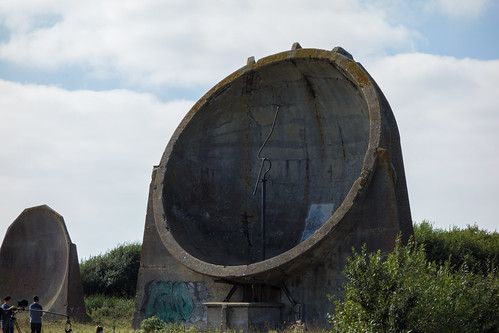
Sound Mirrors

"Sound Mirrors" also known as "Acoustic Mirrors" at Denge near Greatstone and Dungeness. This is a former RAF site where in the late twenties and early thirties, experimental buildings were built to provide early warning of aircraft reaching Britain. The "ears" were designed to capture sound.

Sound Mirrors also known as Acoustic Mirrors at Denge near Greatstone and Dungeness

You can only get close to the Sound Mirrors on a couple of days a year. When we visited, a Sony crew were filming some kind of promotional video.

Source

Friday, September 13, 2013

Do Russian Radar Developments Challenge Stealth? – Commentary by Bill Sweetman

Even when stealth technology was deadly secret and the F-117A did not officially exist, there was counter-stealth radar.

55Zh6ME VHF radar, Russia

Textbooks told us radar cross-section (RCS) was frequency dependent, and tended to become increasingly so as the target shape grew more complicated. If the radar wavelength is of the same magnitude as prominent features of the target, the signal is scattered by a resonant mechanism that is unimpressed by cunning shaping or materials magic. In the 1980s, many older Russian systems operated in the VHF band, with wavelengths in the 1-2-meter range, which is about the same as the chord of a fighter’s tail surfaces and wingtips.

But, as I wrote in 1987:

“The price of increasing wavelength … is that the antenna has to grow in proportion to the wavelength in order to maintain a narrow beam and adequate resolution. The ‘mobile’ Soviet VHF radars are cumbersome, and early-warning radars such as Tall King (P-14) are large fixed structures and provide coverage of only one sector. Despite the size of their antennae, they are not accurate enough to manage a complete engagement.”

Sunday, September 8, 2013

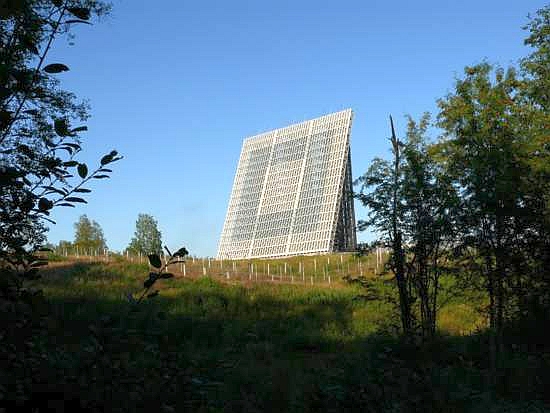
РЛС ВОРОНЕЖ-М / ДМ

77Я6 Воронеж — российская надгоризонтная радиолокационная станция

РЛС дальнего обнаружения системы предупреждения о ракетном нападении (СПРН) и контроля космического пространства высокой заводской готовности (ВЗГ).
77Я6 Воронеж — российская надгоризонтная радиолокационная станция системы дальнего обнаружения высокой заводской готовности. РЛС способна обнаруживать баллистические, космические и аэродинамические объекты, в том числе баллистические и крылатые ракеты.

История

В период до 1991 г. в СССР была создана и надежно функционировала уникальная система ракетно-космической обороны (РКО) страны в составе систем предупреждения о ракетном нападении (СПРН), контроля космического пространства (СККП), противокосмической обороны (ПКО) и противоракетной обороны (ПРО). Одним из основных элементов этих систем являются радиолокационные станции (РЛС) дальнего обнаружения, большинство из которых исчерпали свои расчетные технические ресурсы. Ныне действующие РЛС СПРН, СККП и ПКО были модернизированы и способны нормально функционировать достаточно длительное время.

Saturday, April 27, 2013

DYE 4 - Distant early warning radar station, in Greenland, Kulusuk 1962

DYE 4 is one of nearly 60 radar sites set up during the Cold War as part of an early-warning detection system that stretched across the far north of Canada. Build in cooperation between the US and Canada, the project was a hugely expensive undertaking, and DYE-4 was one of its most vital links. System was abandoned in the late 1980s when satellites made its 200-foot-tall radar domes obsolete, but the structures are still standing-according to recent visitors, snow drifts fill most of the rooms now. DYE 4 was decommissioned 24 Sept 1991.

DYE 4 - Distant early warning radar station, in Greenland, Kulusuk 1962

Source