Showing posts with label Raytheon. Show all posts

Thursday, August 28, 2014

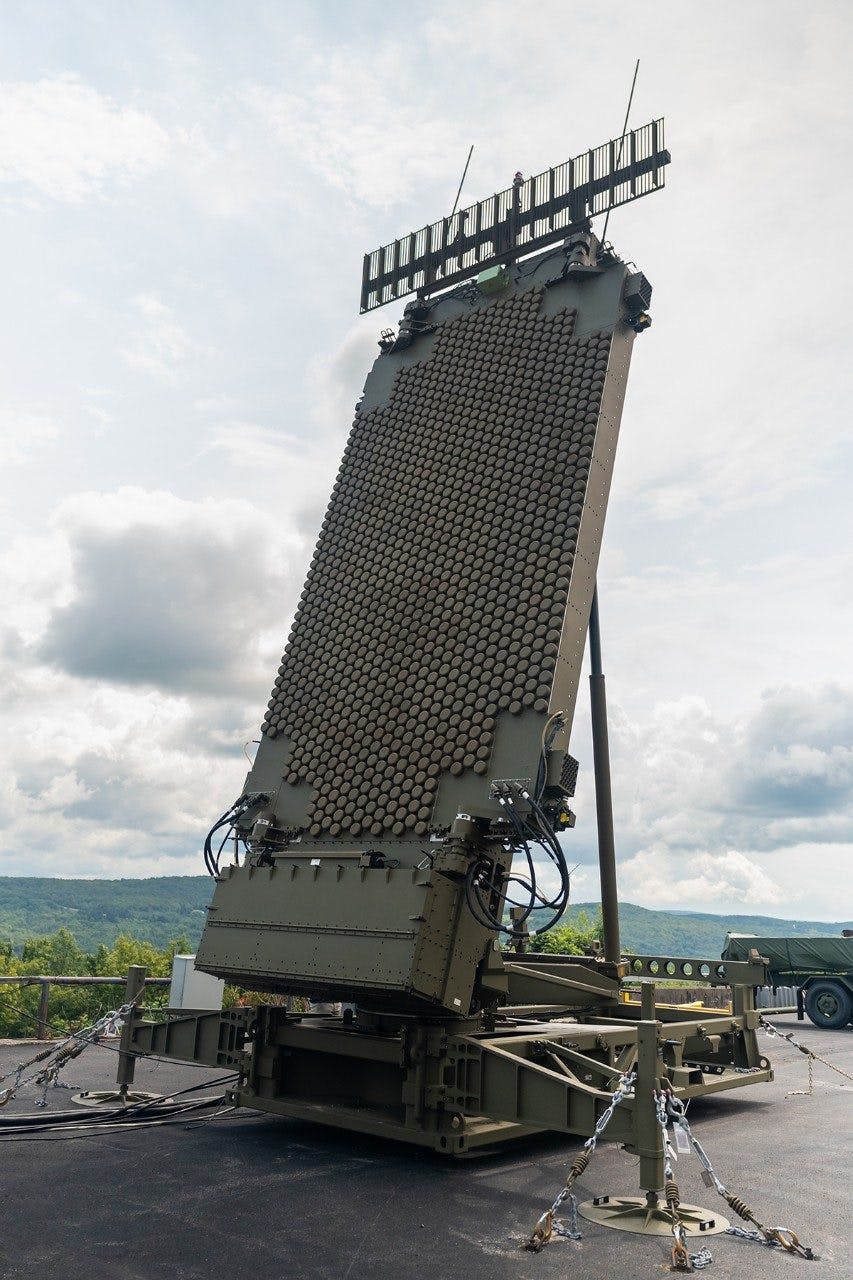
US Air Force Could Award Long-Range Radar Contract Next Week

Fire Control RadarThe U.S. Air Force is close to naming the winner of a contract to produce long-range, ground-based sensors for tracking hostile aircraft and missiles, Defense News reported Wednesday.

Aaron Mehta writes that Lockheed Martin (NYSE: LMT), Northrop Grumman (NYSE: NOC) and Raytheon (NYSE: RTN) are competing for the Air Force’s Three Dimensional Expeditionary Long-Range Radar development program.

The 3DELRR contract could be awarded next week and the selected contractor will work to build 35 air defense radars for the service, according to Defense News.

Mehta reports the branch plans a critical design review of the system by the end of the first quarter of 2015.

The Air Force also expects the technology to enter low-rate initial production in early fiscal 2018 and achieve initial operational capability by fiscal 2020.

3DELRRs will be built to replace the branch’s legacy AN/TPS-75 field radars, according to Mehta’s article.

Source

Wednesday, August 27, 2014

Improved US anti-radar missile hits its mark during test

The US Air Force and missile manufacturer Raytheon Co. successfully tested an upgraded anti-radar missile designed to more accurately take out enemy air defense early-warning systems.

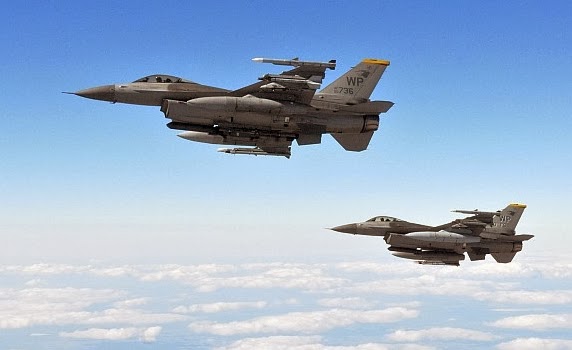
An air force Lockheed Martin F-16 on 22 August fired an AGM-88 high-speed anti-radiation missile (HARM), which scored a direct hit on a specific radar emitter outside a zone of exclusion that included another decoy emitter, Raytheon announces.

The AGM-88 is used to find and destroy surface-to-air missile radars, early warning radars, and radar-directed air defence artillery systems to allow safe battlefield overflight of conflict zones by US and allied aircraft. The missiles identify and home in on the electronic transmissions emitted by radar installations. More than 4,000 HARMs have been fired in combat by the eight nations that include them in their munitions inventories.

"Raytheon's HCSM offers the warfighter enhanced capabilities at an affordable price, providing best value for suppression of enemy air defence weapon options," Mike Jarrett, vice president of Raytheon Air Warfare Systems, says in a statement announcing the test’s success.

Improvements to the missile in the recent test include a HARM control section modification (HCSM) that increases accuracy and precision, thereby reducing the risk of collateral damage, Raytheon says. GPS and an inertial measurement unit provide more accurate targeting and navigation data to the warhead after launch “to engage time-critical targets”, the company says.

The missiles is also specially designed to destroy modern surface-to-air missile installations and resist jamming and other counter-HARM systems.

“The HCSM used its new ... capability and successfully impacted the correct target,” Raytheon says. Yet more testing “is needed to determine if the HCSM is ready for deployment to the US Air Force.”

Raytheon produces HARM missiles under a 2012 contract with the air force and is currently under full-rate production.

Source
Monday, August 25, 2014

Missile Defense | MDA Kill Vehicle Redesign, Target Radar Gain Traction on Hill

The Senate Appropriations defense subcommittee, chaired by Sen. Richard Durbin (above), a missile defense skeptic, noted that the new kill vehicle and the long-range target-discrimination radar are likely to cost more than $1 billion each to develop. Credit: DoD photo by Glenn Fawcett

The Senate Appropriations defense subcommittee, chaired by Sen. Richard Durbin (above), a missile defense skeptic, noted that the new kill vehicle and the long-range target-discrimination radar are likely to cost more than $1 billion each to develop. Credit: DoD photo by Glenn Fawcett

WASHINGTON — Two U.S. Missile Defense Agency initiatives designed to bolster the reliability and thus credibility of the primary U.S. territorial shield have won support from congressional appropriators, but lawmakers in both the House and Senate have made clear their intent to closely scrutinize the billion-dollar efforts.

The efforts in question are a redesigned kill vehicle for the Ground-based Midcourse Defense system interceptors, variants of which are currently deployed at Vandenberg Air Force Base, California, and Fort Greely, Alaska, and a long-range target-discrimination radar.

Friday, July 18, 2014

F-15E Radar Modernization Program (RMP)


Executive Summary

F-15E Radar Modernization Program (RMP) developmental flight testing began in January 2011. The RMP demonstrated incremental progress towards operational effectiveness, suitability, and mission capability during developmental test activities throughout FY11. IOT&E is scheduled to begin in June 2012.

The Air Force Operational Test and Evaluation Center (AFOTEC) conducted an Operational Assessment (OA) from January 5 through April 29, 2011, to assess RMP progress towards operational effectiveness, suitability, and mission capability in support of the program’s Milestone C decision.

During the OA period, RMP demonstrated functional equivalence to the legacy F-15E radar in some of the system’s air-to-air modes and made progress in meeting air-to-air detection and track capabilities under limited and highly scripted test conditions. However, short range air-to-air capabilities and air-to-ground capabilities were insufficiently mature to demonstrate functional equivalence during FY11 developmental flight test.

Two significant shortfalls were uncovered during FY11 developmental testing: unanticipated electromagnetic interference (EMI) between the radar and aircraft Ultra High Frequency (UHF) radio, and aircraft Environmental Control System (ECS) component failures and in-flight  cautions associated with RMP system integration on the aircraft. Resolution of these shortfalls is ongoing and should be completed prior to IOT&E.

Source and more...

Wednesday, May 28, 2014

Казахстан собирается приобрести РЛС GM400

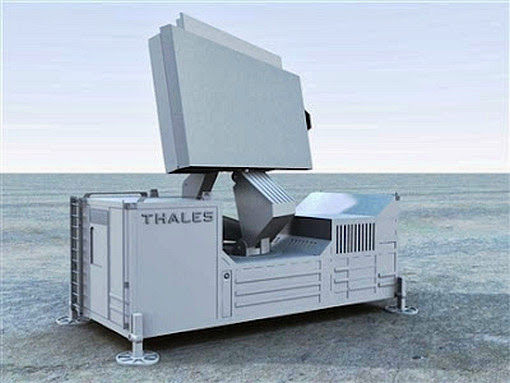
22 мая 2014 года на проходившей в столице Казахстана Астане оборонной выставке KADEX-2014 компания ThalesRaytheonSystems (TRS, совместное предприятие французской группы Thales и американской корпорации Raytheon) подписала меморандум о взаимопонимании о предстоящей поставке для Сил воздушной обороны Казахстана 20 наземных радиолокационных станций Ground Master 400 (GM400). В соответствии с меморандумом, сборка РЛС GM400 для Казахстана будет организована совместным предприятием Granit - Thales Electronics с участием Thales и казахстанского ТОО "СКТБ "Гранит" (Алма-Ата). РЛС получила в Казахстане обозначение "НУР". На выставке KADEX-2014 демонстрировался локализованный образец РЛС "НУР" (GM400), выполненный на базе автомобиля "КамАЗ".

РЛС "НУР" (ThalesRaytheonSystems Ground Master 400) в экспозиции выставки KADEX-2014. Астана, май 2014 года (с) ВКонтакте

Wednesday, March 26, 2014

New Threats, New Technologies Push New USAF Radar Program

WASHINGTON — For years, the AN/TPS-75 has been the US Air Force’s “grab and go” radar system. Get it into an operational field, set it up, and it provides wide-range coverage of what is going on in the skies.

But like so much of the service’s technology, the TPS-75 needs revitalization. The threat environment has changed, and new technologies could render the radar “incapable of detecting some current and emerging threats,” according to service budget documents.
Enter the Three Dimensional Expeditionary Long Range Radar (3DELRR) program. The service plans to replace the TPS-75 with 3DELRR toward the end of the decade, assuming the budget holds.

In the Pentagon’s fiscal 2014 budget request, the service asked for $70.1 million in research, development, test and evaluation funds for the radar program, a figure Congress knocked down to $54.1 million in the National Defense Authorization Act.

For fiscal 2015, the Air Force has again sought an increase, this time to $88.8 million. That request rises to $98.2 million in fiscal 2016, and then drops to $68.6 million in fiscal 2017, $24.7 million in fiscal 2018 and $35.7 million in fiscal 2019.

A timeline included in the budget notes a goal to get 3DELRR out for initial deployment by fiscal 2020, which may explain why those figures drop over time; as the program gets closer to procurement, the need for research funding slows down. Low-rate initial production is scheduled to begin by early fiscal 2018.

Wednesday, March 19, 2014

New USAF Radar Program

WASHINGTON — For years, the AN/TPS-75 has been the US Air Force’s “grab and go” radar system. Get it into an operational field, set it up, and it provides wide-range coverage of what is going on in the skies.

System Check: US Air Force personnel conduct an operational check of an AN/TPS-75 radar system at Balad Air Base, Iraq. (US Air Force)

But like so much of the service’s technology, the TPS-75 needs revitalization. The threat environment has changed, and new technologies could render the radar “incapable of detecting some current and emerging threats,” according to service budget documents.

Enter the Three Dimensional Expeditionary Long Range Radar (3DELRR) program. The service plans to replace the TPS-75 with 3DELRR toward the end of the decade, assuming the budget holds.

In the Pentagon’s fiscal 2014 budget request, the service asked for $70.1 million in research, development, test and evaluation funds for the radar program, a figure Congress knocked down to $54.1 million in the National Defense Authorization Act.

For fiscal 2015, the Air Force has again sought an increase, this time to $88.8 million. That request rises to $98.2 million in fiscal 2016, and then drops to $68.6 million in fiscal 2017, $24.7 million in fiscal 2018 and $35.7 million in fiscal 2019.

Wednesday, October 16, 2013

Raytheon to build advanced radar systems for US Navy

The US Navy has chosen Raytheon Co. over Lockheed Martin Corp and Northrop Grumman Corp to build its new defense radar for use on Arleigh Burke destroyers in a contract valued at $1.6 billion.

For use with the Aegis combat system, the next-gen air and missile defense systems will be integrated with the existing AN/SPQ-9B X-band radar when officially put to use in 2016. Designs are set to outfit at least 22 naval ships; half being built at General Dynamics Corp.'s Bath Iron Works in Maine.

Air and Missile Defense Radar (AMDR) concept

According to reports, the radar will be designed to detect long-range missiles. 

Though the initial design contract was worth $386 million, the optional deal to procure up to nine radars brings the value up.

Monday, August 5, 2013

Northrop Begins Work on U.S./Taiwan F-16 AESA Radar Upgrade

Northrop Grumman expects to be under contract with Lockheed Martin shortly after being selected to supply the active, electronically scanned array (AESA) radar for an F-16 avionics upgrade under development for the U.S. Air Force and Taiwan.

Two F-16 Fighting Falcons pilots maintain their position as they wait for the rest of their four-ship formation to refuel during Red Flag-Alaska April 27, 2010. (U.S. Air Force photo/Capt. Shannon Collins) USAF

Lockheed Martin is the prime contractor for the Combat Avionics Programmed Extension Suite (Capes) upgrade and was tasked by the Air Force with making the AESA source selection, selecting incumbent F-16 radar supplier Northrop Grumman over rival Raytheon.

Around 300 U.S. F-16C/Ds and 145 Taiwanese F-16A/Bs will be upgraded with Northrop’s Scaled Agile Beam radar (SABR), which is based on technology from the F-22’s APG-77(V)1 and F-35’s APG-81 AESAs.

Tuesday, February 12, 2013

Raytheon's Advanced Combat Radar (RACR)

Engaging scenario-based video about RACR, Raytheon's plug-and-play solution for the F-16 Falcon. Also includes information about other Raytheon products for the F-16.

Wednesday, June 10, 2009

US Navy Awards $217m Radar Contract to Raytheon

The US Navy has awarded a $217m contract to Raytheon to provide two volume search radar (VSR) arrays for the Zumwalt Class destroyer programme and the USS Gerald R Ford (CVN 78).

The architecture of the navy's dual-band radar (DBR) allows automatic operation with minimal human intervention and the integration of the S-band VSR radar arrays with SPY-3 X-band multi-function radar capabilities enhances the technology.

DBR is now under testing at the navy's engineering test centre in Virginia.

Under this contract the company will secure materials for the VSR as well as manufacture, test and deliver the radar system for the CVN 78 to support carrier air operations.

A second VSR unit for the Zumwalt Class destroyer programme will also be included in the contract.

The workplaces will be Raytheon's Surveillance and Sensor Center in Massachusetts and Lockheed Martin in New Jersey.

Source

Thursday, February 12, 2009

UK Hails Latest Spy Plane as a Success

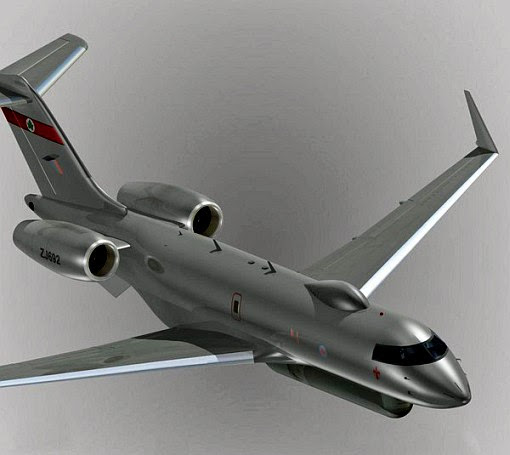
The UK Royal Air Force (RAF) has hailed the Airborne Stand-Off Radar (ASTOR) system on the Sentinel R1 aircraft as a success after returning from trials in Afghanistan.

The aircraft is capable of operating for over nine hours at a time, during which it recognises and detects moving, static and fixed targets on the ground.

UK Minister for Defence, Equipment and Support, Quentin Davies said that the hugely sophisticated system successfully demonstrated what it could do in Afghanistan.

Raytheon Sentinel aicraft with ASTOR radar

"The ASTOR system is a key element of the modern network-enabled battlefield, through which our forces can learn about the movement of enemy forces and react to prevent those threats to our troops," he said.

Wednesday, December 3, 2008

RAF's Innovative ASTOR Radar Now in Service

The British MoD has officially declared the innovative ASTOR (airborne stand-off radar) system in service onboard the RAF's Sentinel R1 aircraft.

The ASTOR System, which was developed under a £860m contract by Raytheon Systems, provides new all-weather intelligence, surveillance, target acquisition and reconnaissance capability to assist commanders on the battlefield.

Royal Air Force Sentinel R.1 visits the National Test Pilot School at Mojave

ASTOR is also designed to communicate with a wide range of other systems and networks and is therefore at the heart of the UK's network-enabled capability (NEC).

Minister for Defence Equipment and Support, Quentin Davies said that the advanced technology will deliver exceptional surveillance capabilities. "The ASTOR radar will link up with other intelligence-gathering equipment providing commanders with a complete picture of the ground allowing them to make immediate decisions on operations," Davies said.