Showing posts with label Surveillance radars. Show all posts

Thursday, August 28, 2014

US Air Force Could Award Long-Range Radar Contract Next Week

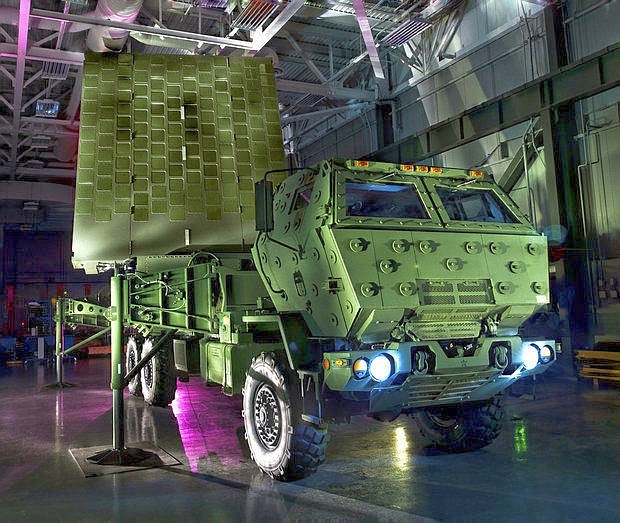
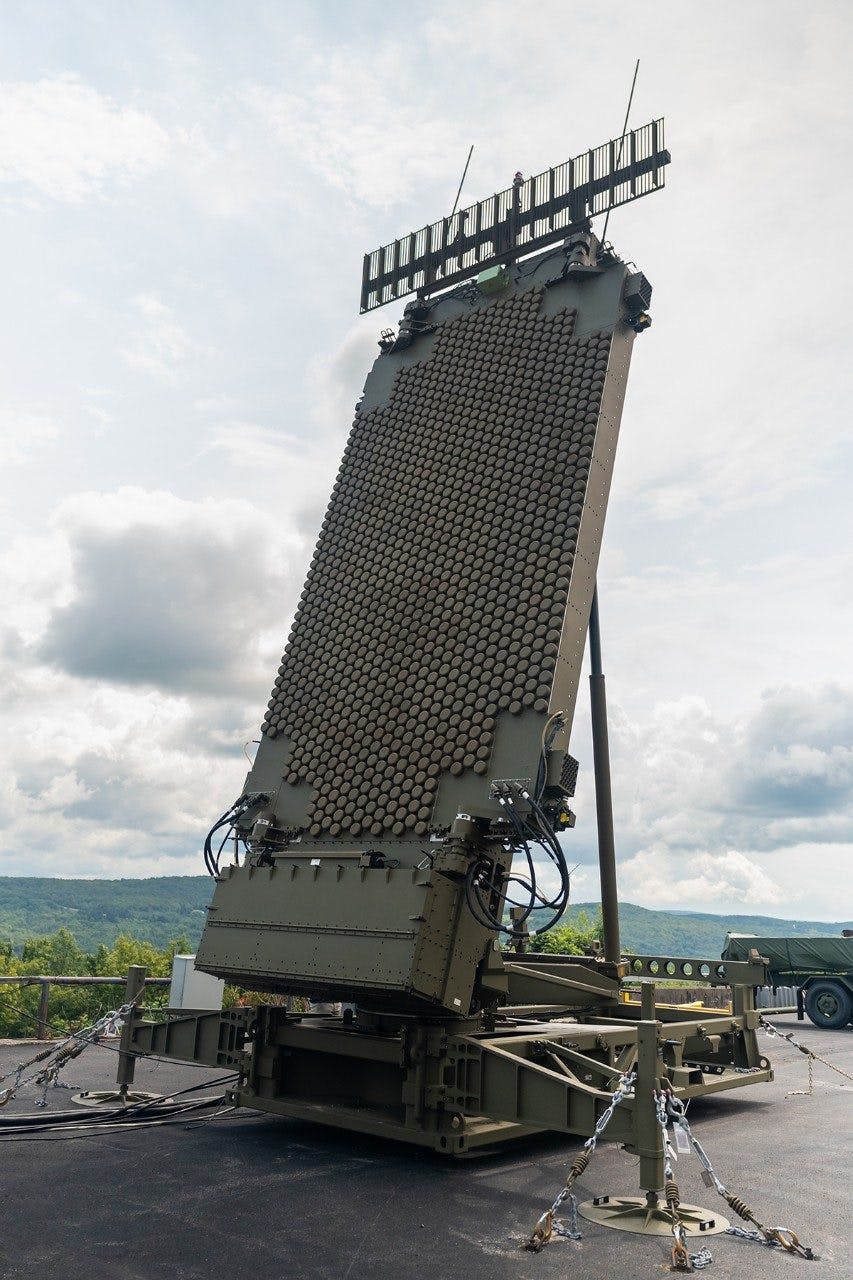
Fire Control RadarThe U.S. Air Force is close to naming the winner of a contract to produce long-range, ground-based sensors for tracking hostile aircraft and missiles, Defense News reported Wednesday.

Aaron Mehta writes that Lockheed Martin (NYSE: LMT), Northrop Grumman (NYSE: NOC) and Raytheon (NYSE: RTN) are competing for the Air Force’s Three Dimensional Expeditionary Long-Range Radar development program.

The 3DELRR contract could be awarded next week and the selected contractor will work to build 35 air defense radars for the service, according to Defense News.

Mehta reports the branch plans a critical design review of the system by the end of the first quarter of 2015.

The Air Force also expects the technology to enter low-rate initial production in early fiscal 2018 and achieve initial operational capability by fiscal 2020.

3DELRRs will be built to replace the branch’s legacy AN/TPS-75 field radars, according to Mehta’s article.

Source

Monday, August 25, 2014

80K6 - a vehicle-carried three-dimensional all-round-looking Ukrainian radar system

The 80K6 is a vehicle-carried three-dimensional all-round-looking radar system designed to detect and track airborne targets flying at low, medium and high altitudes. It can operate independently or as a part of regional or nation-wide computer-aided control systems. The technology was designed and developed by the State Research and Production Complex Iskra.

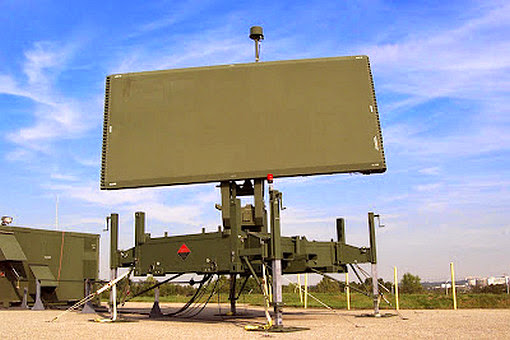
Ukrainian Mobile 3-D Air Surveillance radar 80K6M

If deployed with Air Defense Missile Force units, the 80K6 is used for target data generation for air defense missile weapons control systems. It can also be used by Air Force and air defense elements for air traffic control applications.

The 80K6 radar system offers performance capabilities as following:

  • The detection and tracking of air targets;
  • 3D location and cruising speed measurement of air targets in the presence of active/passive jamming or natural noise, or mix of these two;
  • Friend-or-foe air target identification;
  • Receiving flight-related information from friendly aircraft and transmitting the information to authorized users;
  • measuring the difference in flying target levels for accurate target designation;
  • determining azimuth and elevation bearings of active jamming dispensers;
  • feeding output data into autonomous imagers;
  • interoperation with command posts of local and higher nation-wide computerized control systems.

In terms of its technical characteristics and performance capabilities, the 80K6 radar system is as good as foreign-designed equivalents, while being at least fifty percent less expensive. The entire 80K radar system installation finds enough room onboard a single vehicle.

The accomplishment of very demanding performance capabilities was made possible by the employment of sophisticated state-of-the-art technical solutions, including:

  • low side lobe digital phased array providing enhanced performance capabilities involving target location in elevation and resistance to enemy active jamming attempts;
  • a klystron with a high gain factor which is used as transmitting device, providing the required level of average transmitting power while being not bulky and consuming little power;
  • Non-conventional design and configuration of the all-pass filter, providing an enhanced target discrimination performance capability and enabling target discrimination to be performed concurrently with the measurement of targets’ range rates;
  • improved primary information pre-processing algorithms enabling processing losses to be reduced to the minimum;
  • optimized target tracking algorithms enabling the multiple target tracking performance capability to be improved significantly;
  • equipping operator workstations with color displays, enabling operations to be performed in bright daylight.

See PDF booklet

Operating frequency range S-band (2700…2900 MHz)
Target detection  
           range 6 – 8 … 400 km
           in azimuth 360°
           elevation 0 ... 30 – 35°
           ceiling 400 km
Scanning interval 5; 10 sec
Detection range for targets with RCS equal to 3-5 m2, at P=0.8 and F=10-6,  
           at altitudes up to 100 m 40 km

           at altitudes up to 1,000 m

110 km
           at altitudes from 10 to 30 km 300 – 350 km
Clutter suppression coefficient > 50 dB
Number of targets tracked simultaneously 150-200

Time into and out of action

< 30 min

Source

Thursday, June 5, 2014

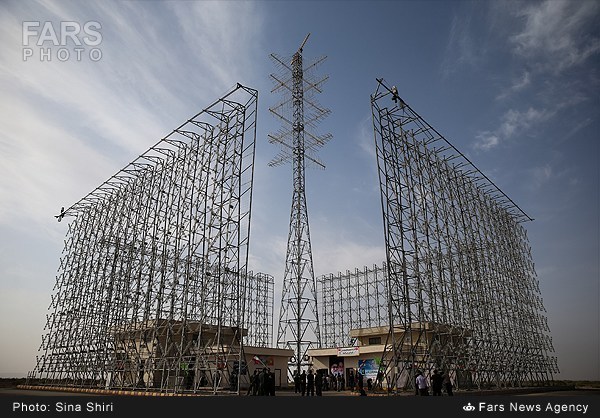
Iran launches cutting-edge Ghadir radar system

Iran's Islamic Revolution Guards Corps (IRGC) has officially put into service a domestically developed long-range radar system capable of detecting stealth aircraft.

The advanced radar system, named Ghadir, was unveiled in a ceremony attended by military top brass, including Commander of Khatam al-Anbiya Air Defense Base Brigadier General Farzad Esmaeili on Monday.

The state-of-the art radar system uses three-dimensional (3-D) technology to detect airborne targets, including radar-evading aircraft, cruise and ballistic missiles, and satellites in low Earth orbits. The system was first unveiled during the Great Prophet 6 military drills in 2011. It was later mass produced by the IRGC's Aerospace Division and underwent several tests in recent months

The Phased Array radar can monitor targets within a radius of 1,100 kilometers at a maximum 300-km altitude.

In November 2013, Iranian navy unveiled an indigenous state-of-the-art array radar system, dubbed Asr (Age), which can detect long-distance targets.
In recent years, Iran has made major breakthroughs in its defense sector and attained self-sufficiency in producing important military equipment and systems.

Despite its great defense achievements, the Islamic Republic has repeatedly said its military might poses no threat to other countries, insisting that its defense doctrine is merely based on deterrence.

3D Phased Array early-warning radar Ghadir, Iran

Иранская РЛС дальнего обнаружения Ghadir

В Иране наконец-то представили трехкоординатную РЛС дальнего обнаружения Ghadir, о строительстве и испытаниях которой много говорили в последние годы. РЛС построена в шахрестане Гермсар остана Семнан, дальность обнаружения целей составляет до 1100 км и высота до 300 км.

Иранская РЛС дальнего обнаружения Ghadir

Wednesday, May 28, 2014

Казахстан собирается приобрести РЛС GM400

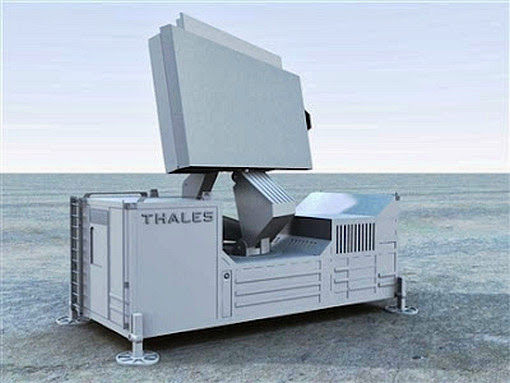
22 мая 2014 года на проходившей в столице Казахстана Астане оборонной выставке KADEX-2014 компания ThalesRaytheonSystems (TRS, совместное предприятие французской группы Thales и американской корпорации Raytheon) подписала меморандум о взаимопонимании о предстоящей поставке для Сил воздушной обороны Казахстана 20 наземных радиолокационных станций Ground Master 400 (GM400). В соответствии с меморандумом, сборка РЛС GM400 для Казахстана будет организована совместным предприятием Granit - Thales Electronics с участием Thales и казахстанского ТОО "СКТБ "Гранит" (Алма-Ата). РЛС получила в Казахстане обозначение "НУР". На выставке KADEX-2014 демонстрировался локализованный образец РЛС "НУР" (GM400), выполненный на базе автомобиля "КамАЗ".

РЛС "НУР" (ThalesRaytheonSystems Ground Master 400) в экспозиции выставки KADEX-2014. Астана, май 2014 года (с) ВКонтакте

Wednesday, April 9, 2014

Sense-And-Avoid Still Causing Triton Turbulence

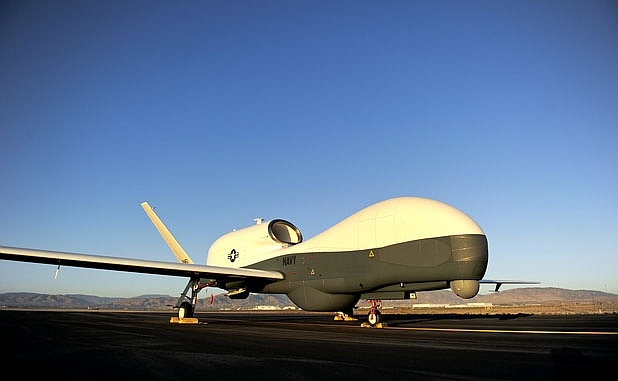
The U.S. Navy continues to assess its options to replace a sense-and-avoid radar that was to be used on the Northrop Grumman MQ-4C Triton unmanned aircraft, but failed to meet expectations.

Northrop Grumman MQ-4C Triton unmanned aircraft

Exelis was selected by Northrop to provide the radar, but the Navy put a stop-work on the contract one year ago and began an assessment of alternatives. No alternative is available off the shelf, says Sean Burke, Navy deputy program manager. The problem was miniaturizing the advanced, electronically scanned array (AESA) radar technology and providing sufficient cooling and power within the available weight and space. It was a “technical solution that turned out to be very challenging for us,” Burke said.

“We are really at the edge of the technology” in developing the system, said Mike Mackey, Northrop Grumman’s Triton program manager. He and Burke briefed the media on the program during the annual Sea-Air-Space 2014 show hosted by the Navy League.

Tuesday, April 8, 2014

Airbus Defence and Space receives radar contract extension in the Middle East

Airbus Defence and Space has been awarded a contract for the delivery of four of its Spexer 2000 security radars to further improve the surveillance of the borders of a major Middle Eastern country. The contract is an extension to an existing contract for the delivery of more than 40 Spexer 2000 radars, which have been operating successfully for almost two years now.

The Spexer 2000 security radar improves the surveillance of borders substantially. Photo: Airbus Defence and Space

Thomas Müller, head of the Business Line Electronics at Airbus Defence and Space, said: “Spexer 2000 is using state-of-the-art Active Electronically Scanning Array (AESA) technology, which provides a multi-tasking and multi-mode capability, and increases the detection and target assessment capability substantially. Due to this, Spexer 2000 can replace several conventional radars.”

Thursday, March 20, 2014

Poland considers MEADS anti-missile radar

This surveillance radar for the MEADS missile defense system was designed and developed at the Lockheed Martin plant in Salina, NY. Costs were shared by NATO allies the United States, Germany and Italy. The surveillance radar can search 360-degrees for incoming missiles, planes and drones and be hauled around on the back of a truck. (Courtesy Lockheed Martin)

WASHINGTON -- A missile defense system the United States has no plans to deploy may find new life in Poland, where leaders Tuesday welcomed Vice President Joe Biden amid rising tensions over Russia's takeover of Crimea.

As Biden visited with President Bronislaw Komorowski in Warsaw, other Polish leaders met privately Tuesday with executives from MEADS International, the consortium developing the Medium Extended Air Defense System.

Poland selected MEADS International, and its main U.S. partner -- Lockheed Martin Corp. -- as one of four finalists for a contract worth up to $5 billion to modernize its air and missile defense systems.

If MEADS wins the competition, it would help boost business at Lockheed Martin in Salina, which developed the 360-degree search radar for the anti-missile system.
The other finalists for the Polish contract are a French consortium that includes Thales and MBDA, the Israeli government, and Massachusetts-based Raytheon, developer of the Patriot anti-missile system.

Sunday, March 9, 2014

Cambridge radar for US homeland security market

A high technology radar from Blighter Surveillance Systems in Cambridge UK is being targeted at the US homeland security and commercial airport markets.

Blighter Surveillance Systems has teamed up with thermal imaging specialist Liteye Systems Inc – which worked on security at the London Olympics – to distribute its radars throughout North America.

Liteye has already sold combined Blighter radar and Aquila PTZ (pan, tilt, zoom) thermal imaging surveillance systems into a number of strategic sites in North America, including Centennial Airport in Colorado.

Blighter B402-SP E-scan Radar with W20S Antennas

The partners will promote a complete range of Blighter ground surveillance radars – including the new Blighter Revolution 360 radar, the long-range Blighter B400 series radars, the vehicle-mobile Blighter B303 radars and the man-portable Blighter B202 Mk 2 radars. The agreement will also include local manufacture and assembly of radars.

Saturday, March 1, 2014

Radar technology a potential export earner as it gives Navy a battle edge

HMAS Perth returns to Garden Island after being fitted with the new Phased Array RADAR System. Photo: Royal Australian Navy

HMAS Perth returns to Garden Island after being fitted with
the new Phased Array RADAR System. Photo: Royal Australian Navy

Most modern radars really do work like the ones in the movies: they spin around, creating the familiar green line moving around a circle like a clock hand in fast-forward.

The problem with such radar for self-defence systems – shooting down incoming missiles – is the system can only check a particular direction every few seconds as the radar swings around.

With the fearsome weaponry carried on modern warships, every second counts in a fight – future sea battles might not last very long.

Tuesday, January 7, 2014

SCR-270 radar

SCR-270 Early Warning Radar

From Wikipedia, the free encyclopedia

SCR-270: Similar to the model that detected the attacking Pearl Harbor planes (the actual Opana antenna was nine dipoles high by four wide, instead of the eight-by-four configuration shown here). The scale for reading the direction the antenna is pointing to can be seen at the base.

The SCR-270 (Signal Corps Radio model 270) was one of the first operational early warning radars. It was the U.S. Army's primary long-distance radar throughout World War II and was deployed around the world. It is also known as the Pearl Harbor Radar, since it was a SCR-270 set that detected the incoming raid about half an hour before the attack commenced.

Friday, December 20, 2013

Новый корабль ГРУ проследит за американской ПРО

Разведывательный корабль «Юрий Иванов» проекта 18280

Главное разведывательное управление России в 2014 году получит новый разведывательный корабль «Юрий Иванов» проекта 18280, пишет газета «Известия» со ссылкой на источник в Министерстве обороны. Новый корабль займется слежением за компонентами американской системы противоракетной обороны на Аляске и Гавайских островах. На «Юрии Иванове» установлена специальная аппаратура радиотехнической разведки, которая позволяет перехватывать и анализировать сигналы радиолокаторов, комплексов вооружения и систем связи.

По словам источника газеты, оборудование нового корабля сможет отслеживать сигналы разной мощности в разных диапазонах. При этом на «Юрии Иванове» не будет собственного вооружения, чтобы в случае обнаружения корабли НАТО не имели формального повода применить силу. Преимуществом нового корабля, основные характеристики и возможности которого засекречены, является то, что он, в отличие от самолета радиоэлектронной разведки, может находиться в зоне патрулирования несколько дней до обнаружения.

Строительством «Юрия Иванова» занимается петербургская «Северная верфь». Корабль был заложен в 2004 году, а передать его военным для испытаний планировалось еще в конце 2012 года. В состав флота корабль-разведчик планировалось включить в ноябре 2013 года. Однако во время строительства была допущена задержка в поставке двигательной установки 5ДРА с двумя дизельными двигателями 11Д42 «Коломенского завода». В итоге сроки сдачи «Юрия Иванова» перенесли на 2014 год.

Официально «Юрий Иванов» называется «специальным кораблем связи». Его длина составляет 95 метров, ширина ─ 16 метров, а осадка ─ четыре метра. Водоизмещение корабля составляет 2,5 тысячи тонн. Ранее сообщалось, что «Юрия Иванова» планируется включить в состав Тихоокеанского флота. В общей сложности по проекту 18280 планируется построить два разведывательных корабля.

Источник

Friday, December 13, 2013

Атомный корабль радиоэлектронной разведки ССВ-33 «Урал»

Атомный корабль радиоэлектронной разведки ССВ-33 «Урал»

В 1977 году ЦК КПСС и СМ СССР приняли Постановление о создании корабля проекта 1941 (при закладке получившего название «Урал») с системой специальных технических средств разведки «Коралл».

После прибытия на место базирования (залив Стрелок, поселок Тихоокеанский, Тихоокеанский флот) экипаж начал подготовку к боевому походу в район испытательного ракетного полигона ПРО США на атолле Кваджелейн. Однако этот поход так и не состоялся. Долгое время экипаж, даже с помощью специалистов Балтийского завода, не мог устранить неисправность в системе охлаждения корабельной ядерной установки. Выпускники военных сухопутных училищ и академий — специалисты по эксплуатации уникальных комплексов системы «Коралл», МВК «Эльбрус» и функционального программного обеспечения — не желали больше служить на флоте и стали списываться на берег.

Проблему эксплуатации бортовой ядерной установки и основных комплексов системы «Коралл» Военно-морской флот не мог решить в течение нескольких лет. После распада СССР аппаратура была законсервирована, а технологические помещения заварены. Такой оказалась судьба большого атомного разведывательного корабля «Урал» с системой специальных технических средств разведки «Коралл».

Давайте узнаем подробнее историю этого корабля …

Thursday, November 14, 2013

MEADS Dual Intercept Flight Test 02

The Medium Extended Air Defense System (MEADS) intercepted and destroyed two simultaneous targets attacking from opposite directions during a stressing demonstration of its 360-degree air and missile defense (AMD) capabilities at White Sands Missile Range, N.M. The flight test achieved all criteria for success. Learn more…

MEADS International, a multinational joint venture headquartered in Orlando, Fla., is the prime contractor for the MEADS system. Major subcontractors and joint venture partners are MBDA in Italy and Germany, and Lockheed Martin in the United States. The MEADS program management agency NAMEADSMA is located in Huntsville, Ala.

Saturday, October 12, 2013

Норвежский специальный корабль для ведения военной радиотехнической разведки

Норвежский специальный корабль для ведения военной радиотехнической разведки F/S Marjata

Военное судно «F/S Marjata» является специальным кораблем для ведения военной радиотехнической разведки и третьим с названием «Marjata», каждое из которых эксплуатировалось норвежским военно-морским флотом. Военное судно принадлежит норвежскому научно-исследовательскому институту обороны и считается самым современным кораблем такого типа.

Военное судно «F/S Marjata» построено 18 декабря 1992 года на судостроительной верфи «Langsten shipyard» являющееся филиалом компании «Aker Yards» («STX Europe»). Его основной базой является Киркенес.

Friday, September 13, 2013

Do Russian Radar Developments Challenge Stealth? – Commentary by Bill Sweetman

Even when stealth technology was deadly secret and the F-117A did not officially exist, there was counter-stealth radar.

55Zh6ME VHF radar, Russia

Textbooks told us radar cross-section (RCS) was frequency dependent, and tended to become increasingly so as the target shape grew more complicated. If the radar wavelength is of the same magnitude as prominent features of the target, the signal is scattered by a resonant mechanism that is unimpressed by cunning shaping or materials magic. In the 1980s, many older Russian systems operated in the VHF band, with wavelengths in the 1-2-meter range, which is about the same as the chord of a fighter’s tail surfaces and wingtips.

But, as I wrote in 1987:

“The price of increasing wavelength … is that the antenna has to grow in proportion to the wavelength in order to maintain a narrow beam and adequate resolution. The ‘mobile’ Soviet VHF radars are cumbersome, and early-warning radars such as Tall King (P-14) are large fixed structures and provide coverage of only one sector. Despite the size of their antennae, they are not accurate enough to manage a complete engagement.”

Saturday, August 3, 2013

Россия: Свидание с Леной М

Посёлок Амдерма в Ненецком автономном округе.

В Советском Союзе, ещё в середине 1950-х годов было принято решение разрабатывать новые радиолокационные станции не в виде передвижных устройств на автомобильных шасси и прицепах, а в виде стационарных помещений, расположенных на закреплённых за ними позициях. Это позволяло создавать большие антенны, не экономить на числе аппаратуры и её размерах, а так-же расположить аппаратуру с защитой её от морозов или зноя. Одной из таких новых разработок РЛС получившая название Лена-М или П-70, или как её ныне часто называют Лена П-70. Станция была разработана в Горьковском НИИ Радиотехники в период 1960-1968 годы и предназначалась для работы на протяжённых границах страны. Главным конструктором стал Овсянников Василий Иванович, автор уже зарекомендовавшей себя РЛС П-14 или Лена.

РЛС Лена-М (П-70)

Станция П-70 работала в метровом диапазоне волн и обладала несколькими выдающимися особенностями. Во-первых, она имела максимальную отдачу мощности с единицы площади антенны, а именно 17000 Ватт с квадратного метра. Для примера, РЛС П-14 могла отдать лишь 500 Вт с квадрата. При этом мощность передатчика составляла около 20 кВт.