Captain Bill Lusk of Southwest Airlines explains what the radar is showing to the media on a monitor during a Honeywell test flight that left out of Dallas Love Field Airport in Dallas on Wednesday, August 13, 2014. Honeywell developed new technology that helps pilots spot bad weather and then, by showing them the storm in 3-D, help them steer around it.
SOMEWHERE OVER SOUTH TEXAS — Smart pilots fly away from bad weather. But on this sweltering summer day, Markus Johnson and Joe Duval are flying straight toward thunderstorms swelling up over the Gulf of Mexico along the South Texas coast.
It’s not because they long to fly their 1952 Convair 540 through the rollercoaster of updrafts and downdrafts or to be pummeled by hail and rain. It’s to show off the latest generation of Honeywell International Inc.’s weather radar system, known as IntuVue.
They use the radar to skirt the right side of a good-size thunderstorm between Houston and Galveston, then the left side of another thunderstorm to the airplane’s right.
Inside the storms, the radar shows a lot of green (light rain) and yellow (medium rain) with a smidgen of red (heavy rain). But on the flight itself, the airplane glides through nearly smooth air as it flies between the two summer storms.
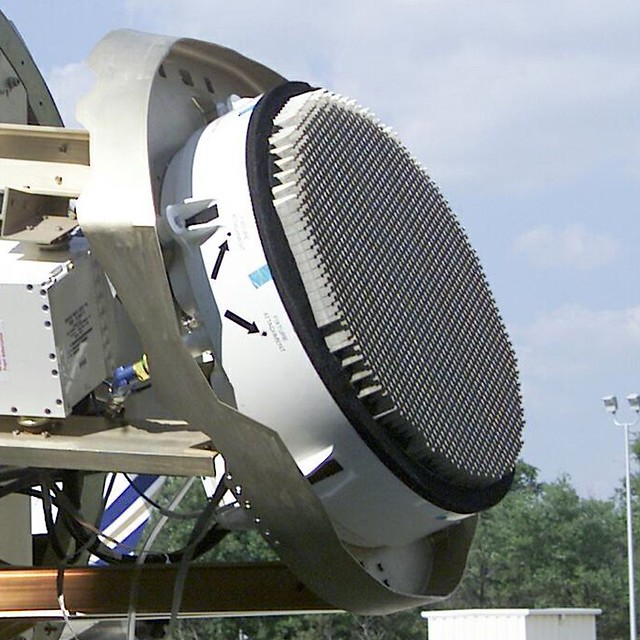
Of course, airlines and other aircraft operators have used radar for decades to help them locate and avoid storms. It’s a rare airplane that doesn’t have radar equipment installed in its nose and a display screen in the cockpit.
What Honeywell touts is that its new radar system displays a lot more information in greater detail, in three dimensions, and pilots don’t have to work nearly so hard to get it.
Greg Schauder, a Honeywell director of product marketing, said the two-dimensional radars usually require a pilot to manually change the radar scan if he wants to look higher up or lower down in a storm or in different directions. The radar collects information only where the pilot has asked it to scan.