Sunday, December 27, 2009

Short-Wavelength Technology and the Potential For Distributed Networks of Small Radar Systems

David McLaughlin, David Pepyne, Brenda Philips, James Kurose, Michael Zink, David Westbrook, Eric Lyons, Eric Knapp, Anthony Hopf, Alfred Defonzo, Robert Contreras, Theodore Djaferis, Edin Insanic, Stephen Frasier, V. Chandrasekar, Francesc Junyent, Nitin Bharadwaj, Yanting Wang, Yuxiang Liu, Brenda Dolan, Kelvin Droegemeier, Jerald Brotzge, Ming Xue, Kevin Kloesel, Keith Brewster, Frederick Carr, Sandra Cruz-Pol, Kurt Hondl, and Pavlos Kollias, 2009: Short-Wavelength Technology and the Potential For Distributed Networks of Small Radar Systems. Bull. Amer. Meteor. Soc., 90, 1797–1817. doi: http://dx.doi.org/10.1175/2009BAMS2507.1 -
http://journals.ametsoc.org/doi/abs/10.1175/2009BAMS2507.1
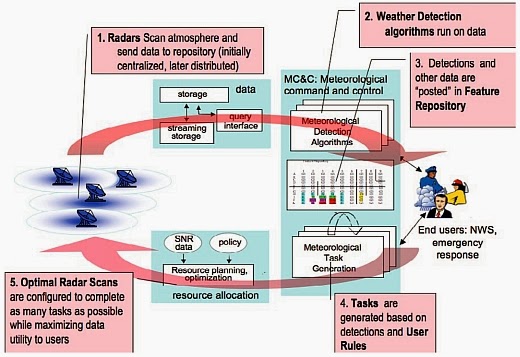
CASA project: Flow diagram depicting the major processing steps of the closed-loop software architectureFlow diagram depicting the major processing steps of the closed-loop software architecture

Abstract. Dense networks of short-range radars capable of mapping storms and detecting atmospheric hazards are described. Composed of small X-band (9.4 GHz) radars spaced tens of kilometers apart, these networks defeat the Earth curvature blockage that limits today's long-range weather radars and enables observing capabilities fundamentally beyond the operational state-of-the-art radars. These capabilities include multiple Doppler observations for mapping horizontal wind vectors, subkilometer spatial resolution, and rapid-update (tens of seconds) observations extending from the boundary layer up to the tops of storms. The small physical size and low-power design of these radars permits the consideration of commercial electronic manufacturing approaches and radar installation on rooftops, communications towers, and other infrastructure elements, leading to cost-effective network deployments. The networks can be architected in such a way that the sampling strategy dynamically responds to changing weather to simultaneously accommodate the data needs of multiple types of end users. Such networks have the potential to supplement, or replace, the physically large long-range civil infrastructure radars in use today.
Thursday, September 24, 2009

Abandoned Radar Station - RAF Stenigot, Lincolnshire, England

After the invention of radar in the late 1930s, the UK built a string of early-detection systems along its coastline. A major hub in this "Chain Home" was the RAF Stenigot, in Lincolnshire. In the 1950s, the station was updated with tropospheric scatter dishes, which allowed the army to transit and receive microwave signals by beaming them through the troposphere-the lowest level of the Earth's atmosphere. They were eventually decommissioned in the 1980s, and today the abandoned dishes are used for everything from climbing to skateboarding.

Abandoned Radar Station - RAF Stenigot, Lincolnshire, England

Photo: DigiTaL~NomAd

Wednesday, June 10, 2009

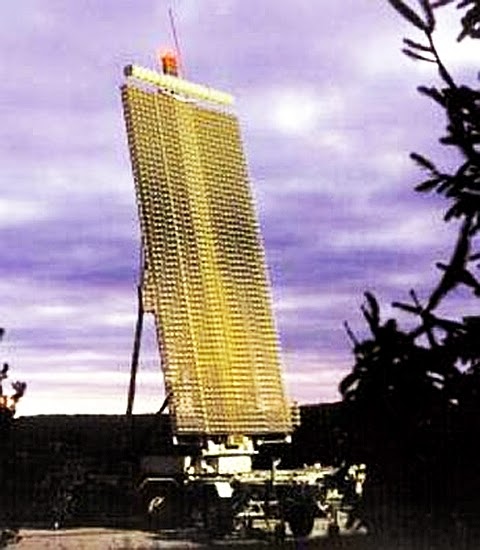
US Navy Awards $217m Radar Contract to Raytheon

The US Navy has awarded a $217m contract to Raytheon to provide two volume search radar (VSR) arrays for the Zumwalt Class destroyer programme and the USS Gerald R Ford (CVN 78).

The architecture of the navy's dual-band radar (DBR) allows automatic operation with minimal human intervention and the integration of the S-band VSR radar arrays with SPY-3 X-band multi-function radar capabilities enhances the technology.

DBR is now under testing at the navy's engineering test centre in Virginia.

Under this contract the company will secure materials for the VSR as well as manufacture, test and deliver the radar system for the CVN 78 to support carrier air operations.

A second VSR unit for the Zumwalt Class destroyer programme will also be included in the contract.

The workplaces will be Raytheon's Surveillance and Sensor Center in Massachusetts and Lockheed Martin in New Jersey.

Source

Thursday, April 23, 2009

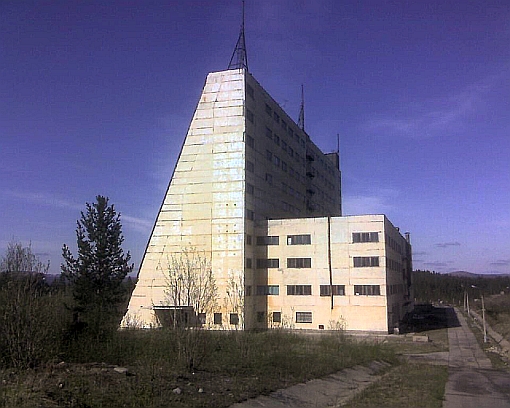
Приемная радиолокационная станция РЛС Даугава

В середине 50-х годов была начата работа по созданию системы предупреждения ракетного нападения. Уже существовавшие на тот момент отдельные радиолокационные станции должны были объединиться в комплексы, из которых в дальнейшем комплектовались радиолокационные узлы.

Входящие в состав системы ракетно-космической обороны средства представляют собой сложные программно-аппаратные комплексы, обеспечиваемые инженерной поддержкой: конструкторы и инженеры постоянно стремятся к усовершенствованию систем обеспечения бесперебойного функционирования всех составляющих оборонного комплекса. В ходе этих работ решается ряд проблем научно-технического и производственного плана, что в итоге приводит к появлению усовершенствованной техники. Так, на основе центральной станции обнаружения баллистических объектов (ЦСО-П), работающей в метровом диапазоне, была разработана РЛС дальнего обнаружения типа «Дунай» с дальностью обнаружения объектов на расстоянии до 1 200 км, а созданная позже принципиально новая РЛС типа «Днестр» впоследствии была модифицирована до РЛС типа «Днепр».

Приемная радиолокационная станция (ПРЛС) «Даугава» создавалась в 1977 году как прототип РЛС нового типа «Дарьял». Ее антенна была в два раза меньше, чем у станции «Дарьял», но принимающая аппаратура, как и вычислительный комплекс, были оставлены без изменений. В этой станции была впервые применена гибридная СВЧ-технология, а также крупно-апертурные фазированные антенные решетки с фазовым управлением.

Приемная радиолокационная станция РЛС Даугава

В 1978 году станция «Даугава» была установлена в Оленегорске в качестве дополнения к РЛС «Днепр», за счет чего была повышена устойчивость к помехам, вызываемым полярными сияниями, а также улучшило качество получаемой и обрабатываемой информации.

Впоследствии на базе РЛС Даугава и «Днепр» была создана станция нового поколения «Дарьял». Принимающая часть станции «Дарьял», размещенной в Мурманске, носила название «Даугава». Дальнейшая работа над проектом «Дарьял» привела к возникновению модификаций «Дарьял-У» и «Дарьял-УМ», по всем техническим характеристикам превышающих свой прототип - РЛС «Даугава».

Источник